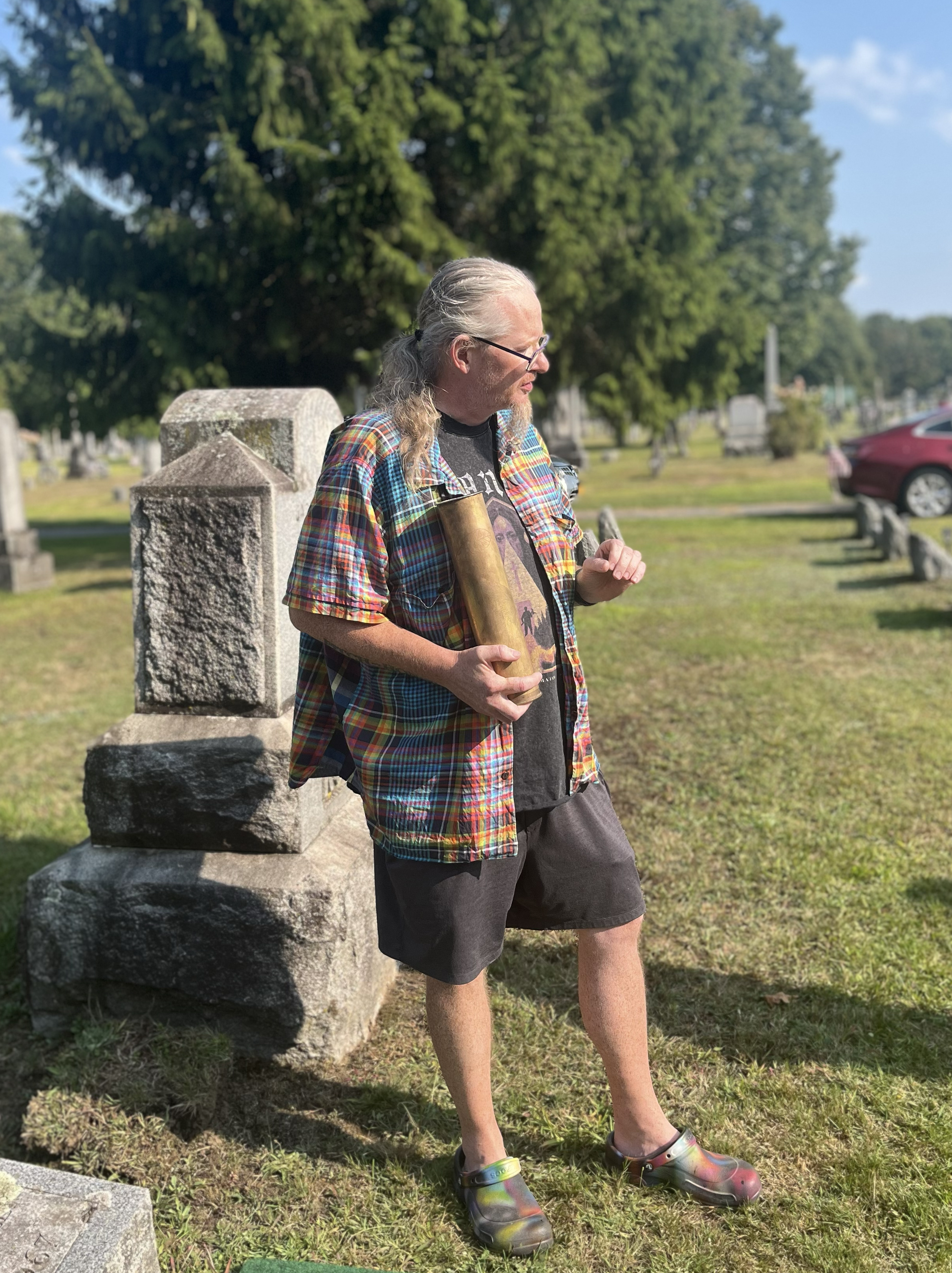
Thanks for visiting. My name is Matt Ballou. I teach at the University of Missouri’s School of Visual Studies, where I’ve been since 2007. At this site you can see a range of my visual and written work.
Who I Am
I am an artist, teacher, writer, and dad who lives in Mid Missouri. This blog, which I began in 2009, records my art practice, as well as words and images that I use to reflect on my experiences in this life. I’m trying to learn how to see and dream well.
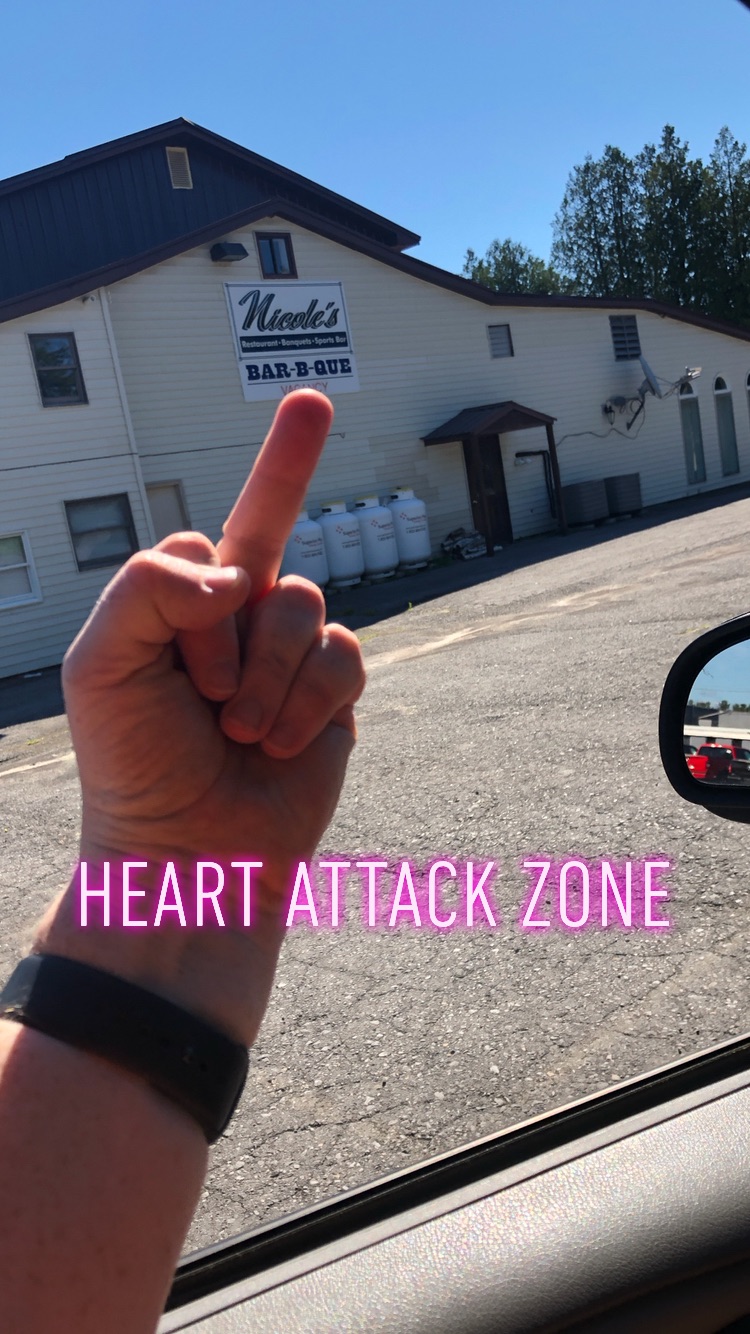
Please browse the various areas in the menu above for more about me. In particular, my adventures in China and at Ox-bow have been integral to who I have become. Additionally, my heart attack was a watershed event that produced radical changes in my art and life.
Context
I have shown my artwork in exhibitions across the US, from Illinois, Kansas, and Massachusetts to New Hampshire, New York, Ohio, and Washington. I have developed and curated exhibitions in Illinois, Maryland, Missouri, and Nebraska. My areas of research include:
Comparing and contrasting Eastern and Western Mandala forms
Investigating how natively digital art practices interact with physical materials
Developing pedagogical uses of technology and online learning environments
Using CNC routers, laser engravers, and various drawing robots in the development of artworks
Writing
My writing has been a key aspect of my practice for over twenty years. Publication highlights include a cover feature on the work of Odd Nerdrum in Image Journal, a profile on painter Joey Borovicka in The New Territory, and an extensive review of Richard Diebenkorn’s Ocean Park Retrospective for the Chicago-based publication neotericART. In the last few years I completed invited texts for The MU Museum of Art and Archaeology, SEEN Journal, and Oxford University Press (Grove Art). See my Bio and CV for more. Several of my personal favorites are linked here.
Current Art
I have had several areas of art-making going on simultaneously over the last decade or so:
Instead of learning from this event, we doubled down on our assumptions and bigotries. What could have made us a better leader, a better ally, a better example, instead made us far worse. As a country we did not learn from the attack, we accepted lies. We accepted lies and then used laws to abuse both others and our own people. We invented ways to surveil, traumatize, and limit the freedoms of people all over the world… and across the street.
America pre-911 is a lost land, a former dream that has been given over to anger, grift, and post-truth diatribes. Wedge issues were manufactured to great effect. The American Dream was leveraged so those who could no longer attain it wouldn’t attack those who actually took it from them… instead they vilified their neighbors.
Those who claimed the moral core were the first to betray it. Those who claimed the traditions of virtue and patriotism were the first to leverage those virtues toward craven ends. Those who claimed the authority of faith were the first to bear false witness. Those who trumpeted liberty were the first to enable authoritarianism.
September 11, 2001 should have been a moment to make America own her “better angels.” Instead, it was when she sold her soul. And we are reaping the harvest now: post-truth garbage, AI slop, and dopamine fixes for the masses while a miniature cartel of billionaires hoard wealth and power. Their stated ends do not include us, the 99% of people, nor do they assume environmental stability. They will happily preside over the end of most of humanity (i.e. culture, art, literature, creativity, meaning), if only their fantasies of a sterile, techno-authoritarian utopia can become reality.
The lesson of 911 was not learned. But if the tech-bros have their way, we’ll all know before we’re wiped out.
This week I was asked to present on how I “use” AI and the concerns I have about it as we come toward the start of another semester here at the University of Missouri. I teach in The School of Visual Studies, and as a part of the Humanities, Art holds an important insight into creativity and human agency that AI is influencing. Like the talk I gave back in May, I wanted this to be personal, passionate, and honest. I hope you’ll enjoy the video version of the talk below. If you’d like a PDF of the script or the PowerPoint of the slides, let me know.
I’m excited to be in a number of very interesting shows this month across the region. Click on the images of the exhibition announcements below to learn more! There’s a gallery at the bottom featuring some of the work I’m showing in these venues.
I’m pleased that three of the four shows feature my WHENEVERwhen series of works, which have steadily been gaining traction in shows and collections over the last few years, most recently entering the collection of Bradley University and several private collections regionally. I have a large collection of them going up in October at Saint Vincennes University as well.
The show at Sager Reeves was something I jumped at when extended an invitation by Hannah Reeves. It gave me a chance to play with sculpture and other aspects of working in the round that I don’t often afford myself. I’m really proud of the works that are being shown in this exhibition.
Order & Chaos at Saint Louis Art Guild, MO:
Plane Sight at Public Defender Art Gallery, IL:
Pattern Play at Columbia Art League, MO:
Cryptids and Other Creatures at Sager Reeves Gallery, MO:
Works at Sager Reeves: Portal and Penitent, Barrel Bob, and Father and Son (Double Cthulhu Portrait). You’ve got to see them in person! (Photos by Sager Reeves Gallery)
Conditional Contexts, Pierce Pounce, and False Flag – some of the works on view at the other venues!
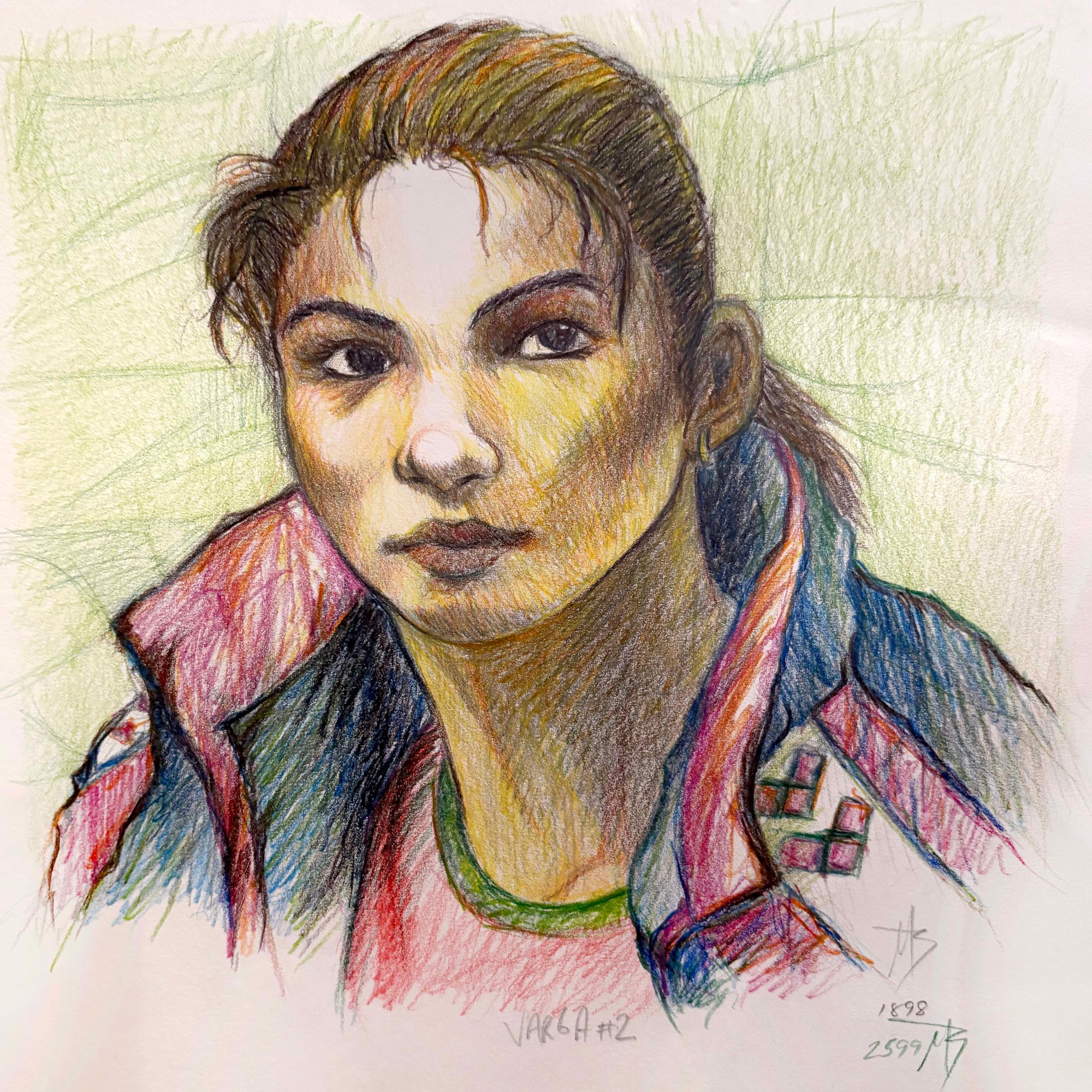
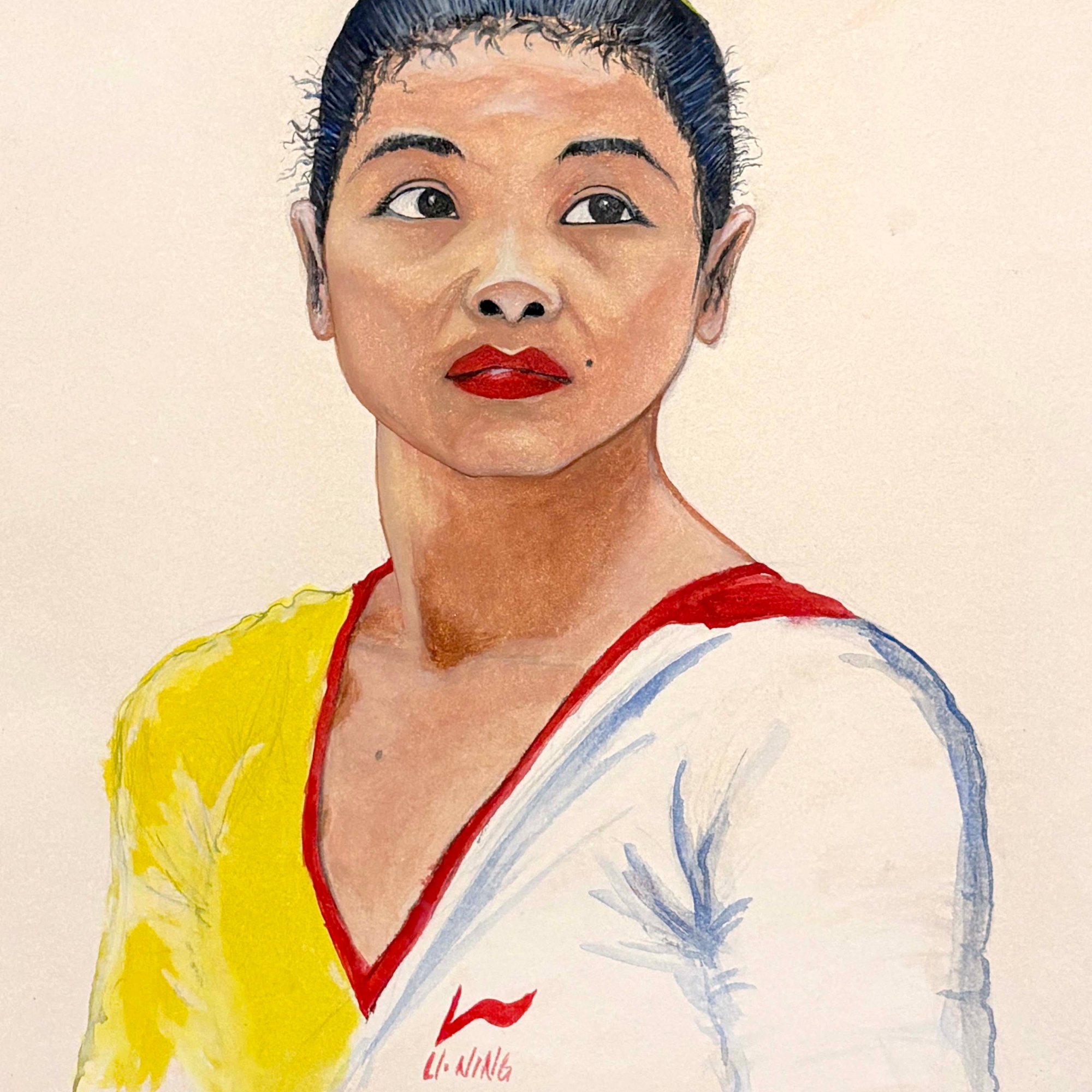
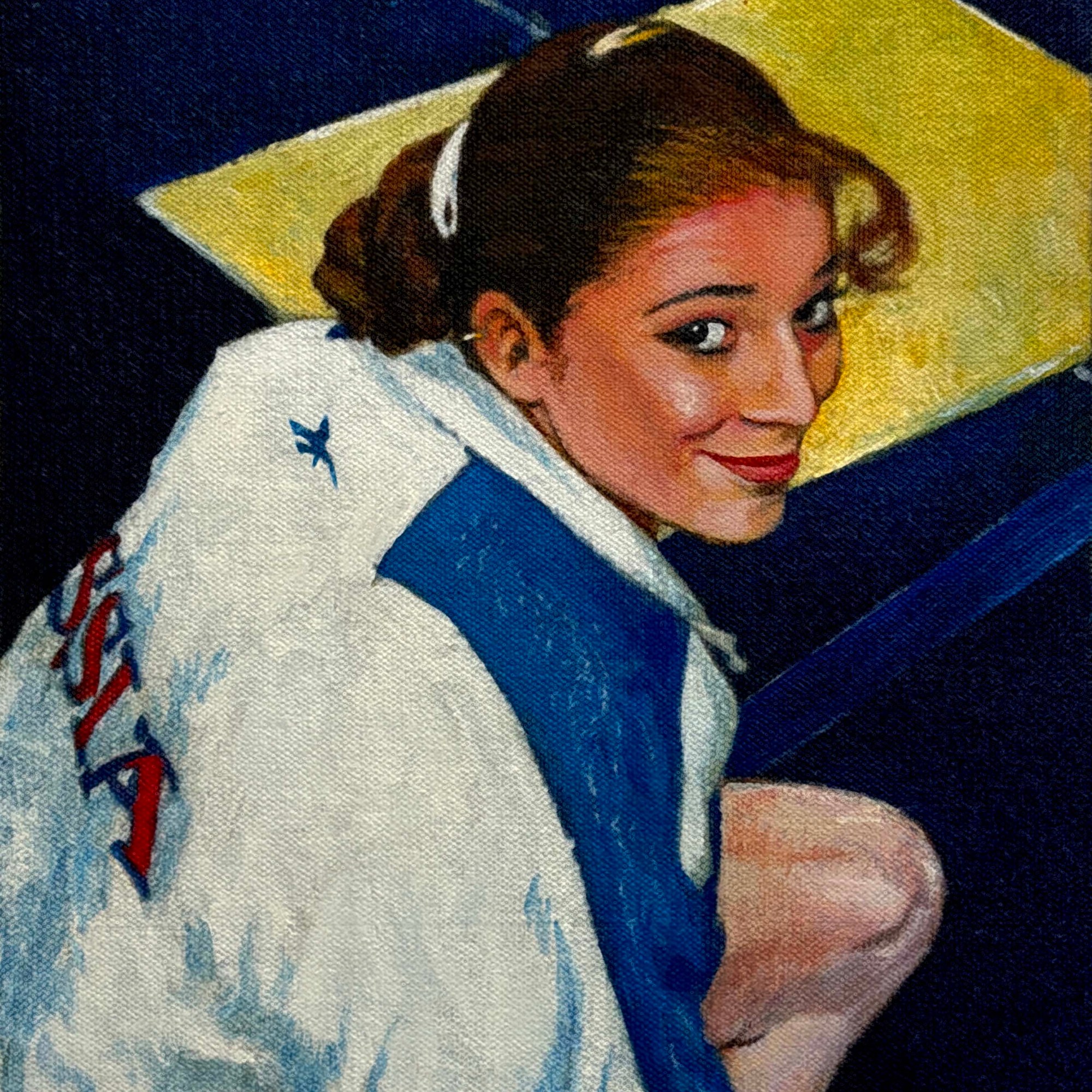
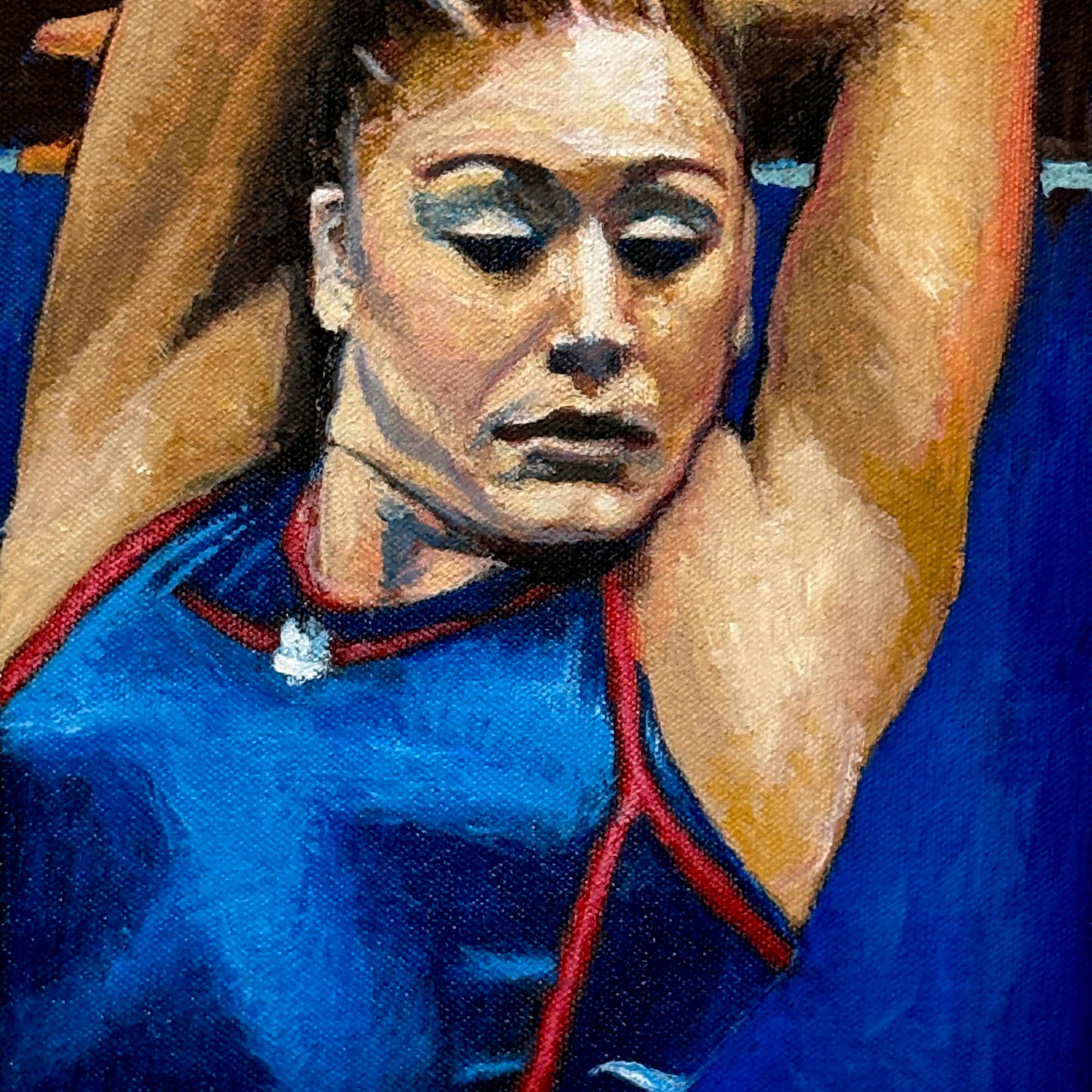
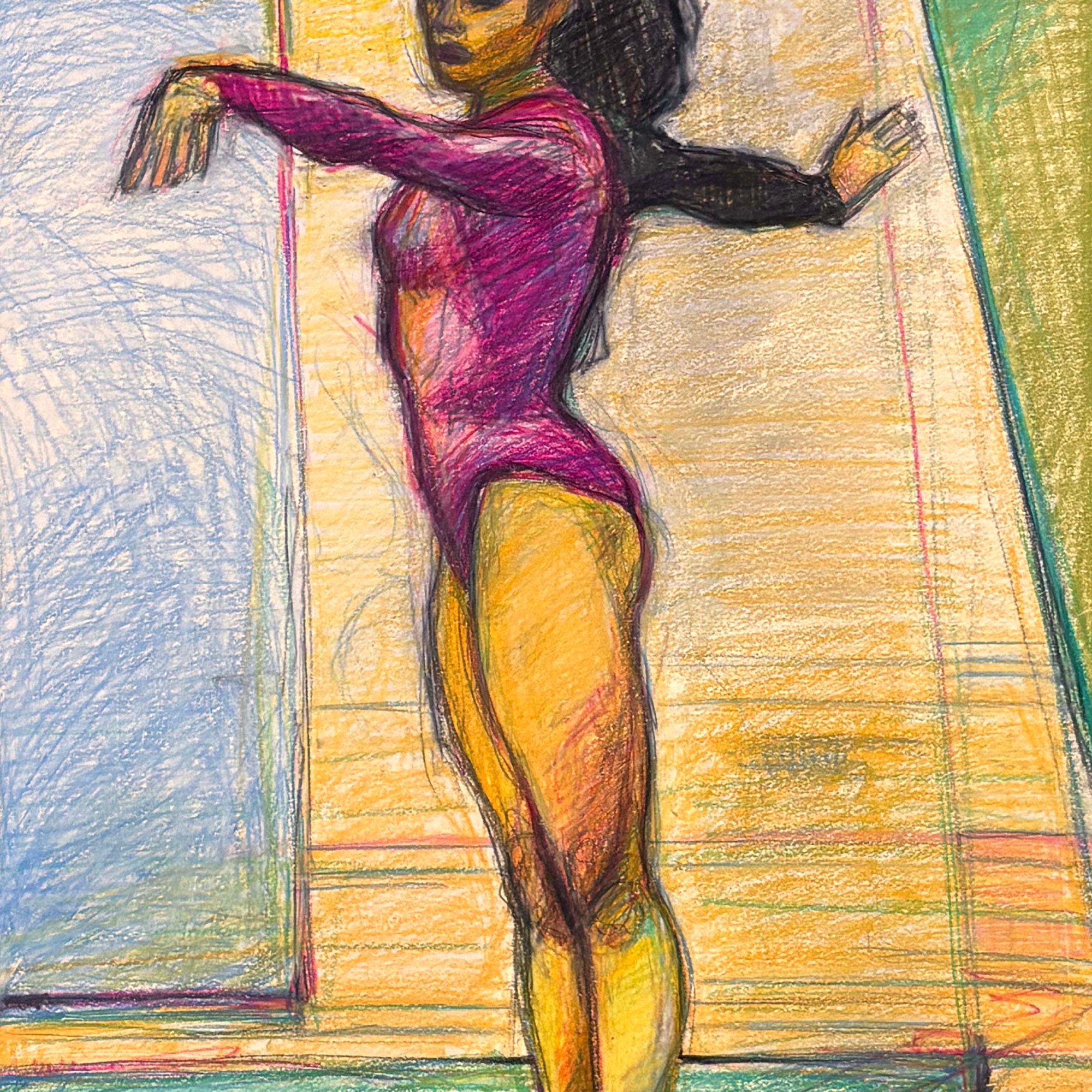
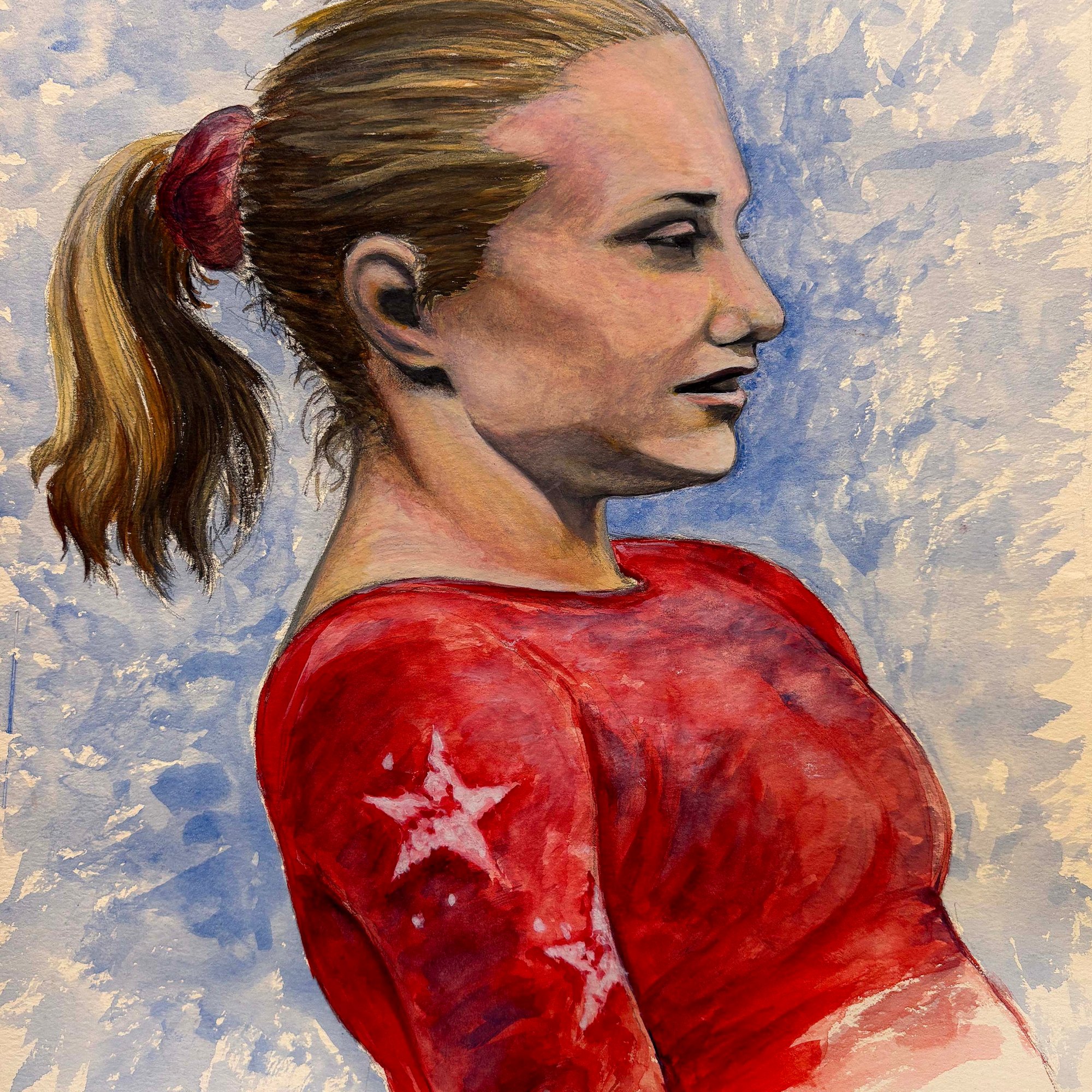
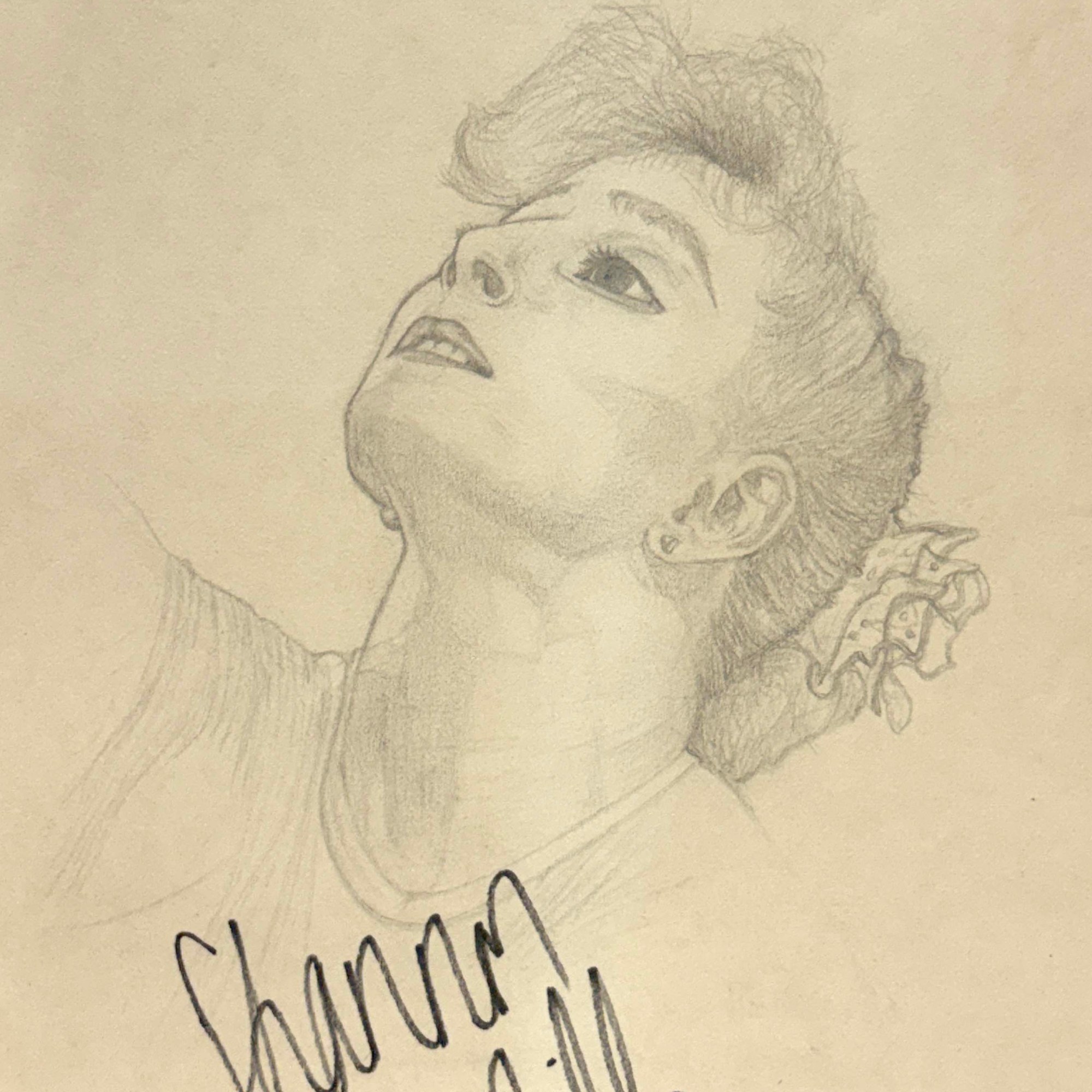
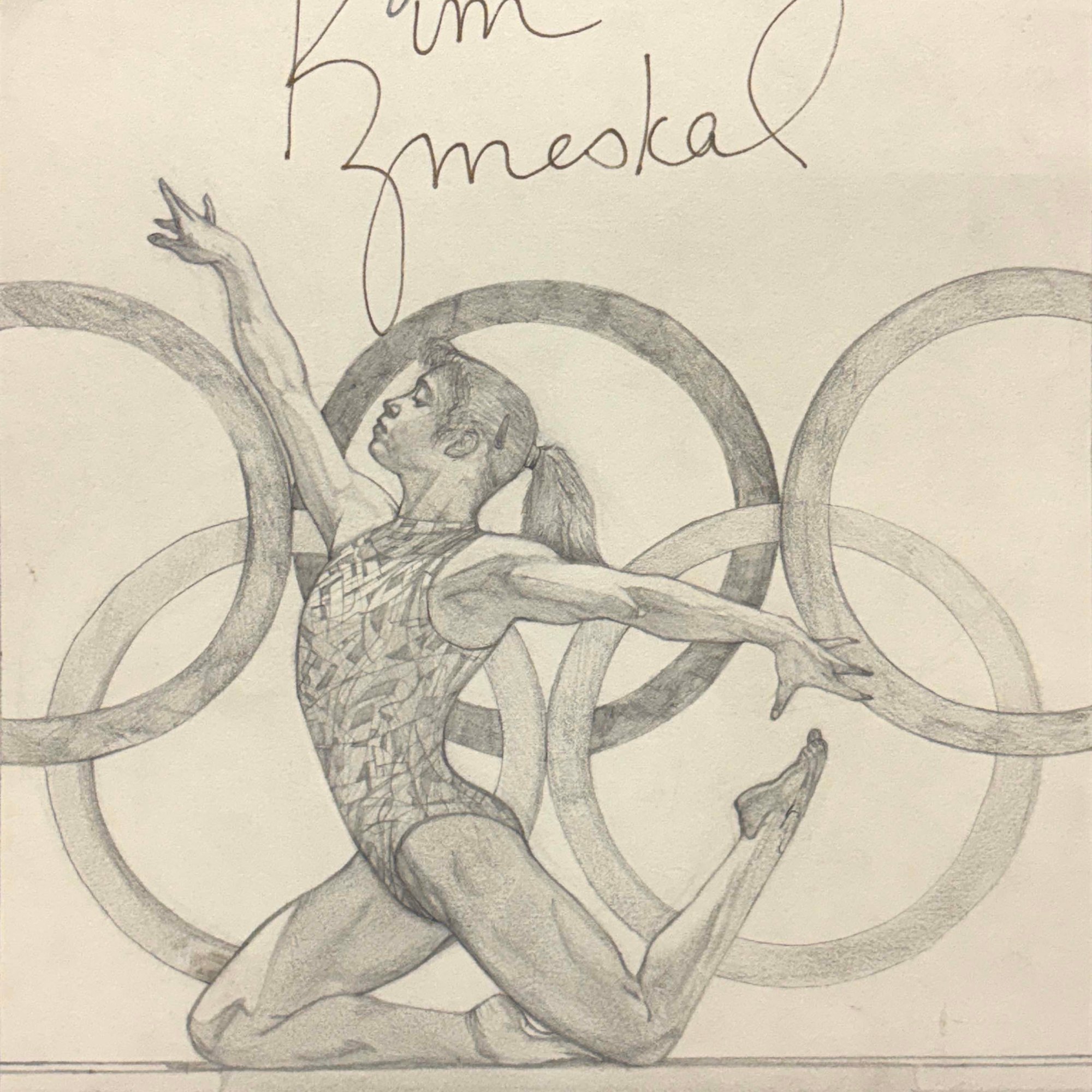
I’m posting a number of my sketches and paintings – just a few of dozens – of gymnasts that I created long ago (the early 90s up to the year 2000 or so). Back in the 80’s I got interested in the Olympics and several sports stuck with me, but perhaps most importantly was gymnastics.
As I grew up and my interest in art became central, I wanted to get a better understanding of the human form. In those days where I lived there were no life drawing classes or opportunities to really work from the figure at all. I recalled the definition of musculature and the examples of human movement that gymnastics afforded, and began to use them as my models to get a grasp of anatomy and an idea of how to depict the body in action.
The images below are some of my favorites. I’ll have to search for some more of them in my files. I know I’ve done at least a dozen works featuring the great Yelena Produnova alone. The ones shown below are (left to right, top to bottom) Adrienn Varga (Hungary), Mo Huilan (China), Produnova (Russia), Jeanette Antoni (USA), another Produnova, Vanessa Atler (USA), Shannon Miller (USA), and Kim Zmeskal (USA). I’ve got a bunch of autographs, but really like that I got my drawings of Miller and Zmeskal signed by each (Zmeskal wrote a really nice letter as well).
As a participant in the “gymnternet” back in the mid-90s, I bumped into a lot of people on a few message boards. In 1998, after messaging with Atler for a while, she sent me tickets to the National Championships in Indianapolis, IN that year. With questionable reasoning, I took a Greyhound bus from Utica, NY to Indy to attend the Championships and hang out with a bunch of people I’d only ever talked to in text on the internet. I ended up meeting Atler in person there, as well as a few other athletes. I also met the person who I’d eventually marry! Given all that I’ve gained from that trip, I’d say the payoff was pretty substantial.
Probably the biggest thing I ever did with my gymnastics artworks was having one shown at the International Olympic Committee’s Sport Art Competition Show at the International Olympic Museum, Lausanne, Switzerland (March – June, 2000). I haven’t laid eyes on that painting in over 25 years… I’ll have to dig it up sometime.
I still pay attention to gymnastics a bit and watch the main meets each year with my family. We also enjoyed watching the Mizzou (where I teach Drawing in The School of Visual Studies) gymnastics squad go on a good run the last couple of seasons. While I don’t really draw the athletes any more, the many hours of time I spent watching the sport and drawing from them gave me the chance to develop a strong sense of the human form. I credit much of my work in graduate school (Indiana University, 2005), where I focused on the body in tension, to my early studies of gymnasts. Also important were the many skills I developed in portraiture. In a sense, my current work for Mizzou Football has a root in these gymnastics artworks from so long ago.
“Teaching AGAINST AI: Pitfalls and worries of AI in teaching and learning” Lectures by Julie Bruneau (Plymouth State University) and Matt Ballou (Mizzou) with a panel discussion with the Wakonse Fellows moderated by Bruneau and Ballou.
Note: What follows is an edited transcript of Ballou’s talk with citations and resources added. Here is a PDF of the talk if you’d like to download it. Feel free to share far and wide.
Matt Ballou – Reflecting on AI, Pedagogy, Embodiment, and Consciousness
The background on this topic for me is that I was an early adopter of skills and tools related to AI and education. This goes back to a question I got in 2013: “Can you teach a fully online studio art class?” I made the first one – a section of beginning level drawing – at Mizzou in 2014. And I received physical artworks from students all over the world through that project. I learned a lot from that initial experience, and it still informs how I teach face-to-face and asynchronous courses today.
Eventually I also began – around 2020 – to start to explore what the AI space was going to be. By the end of 2023, when we had the first widely-used versions of ChatGPT out[i], there was definitely some inkling that it was going to be a major aspect of what I’d potentially have to use, and at least what I’d have to pay attention to. That same year, one of my online digital drawing students began to submit AI-generated drawings. And I know now, from almost three years later, that he ended up becoming a master at prompts. Today, after graduating with a dual BA in Journalism and Strat-Comm and a minor in Art, he does high-level work with prompts of the AI. But his prompting skill was rudimentary enough at the time that I could tell that it was not his physical, technical ability coming through those drawings.
It was interesting. One of the things that I require in my digital drawing class is they have to show me the video. They must have time lapse turned on in their drawing app so that I can watch them draw. When they submit the work – when I see the drawing – I also have the video of the drawing available for review. Strangely, he never sent me the videos of him doing those drawings. Of course, that is because he didn’t do the drawings. We ended up meeting with the administration of the Art program. There was a question of should he just get an F? I said, “No. If he wants to do this, then let’s build it. Let’s make it happen.”
So, what I did is create a project for the student using what is called “ethical” AI[ii], which in this instance used a company called exactly.AI[iii]. They allow you to upload your artwork to build a model within their closed system. Then, you can prompt generated images that only use the visual information from your artwork. To me, that’s an ethical situation because it is not mining the history of human creativity to create something. It’s mining your creativity, the proclivities that come out of your own drawing, inside your own painting, from your own design tendencies, and then it presents you with something that corresponds to your approach. I have generated a couple hundred images with this method. And I would say that around 1 out of 10 was acceptable. They all kind of looked like what I did. But they were… off.
So I picked about 20 of them, printed them out, and then worked back into them. I made them more like mine through physically drawing or painting on the printed versions. I decided to work with my student with a few caveats: you can’t use Midjourney, you can’t use these other image generation tools. You have to use exactly.AI. You have to upload drawings or photography that you did yourself, and then you can use your prompting ability to iterate from them. This way, he could still use a language model. He’s still getting an algorithm that’s processing what things are, but the imagery can’t come from anything other than what he’s done.
That became a really interesting project. Why? Because it was reflective. Because it was iterative. Because he had to accept that he could not simply generate something that was remarkably high quality. Because he had to use it as part of a process. I wanted him to see that the developmental process is not something to be avoided. It is something to be seen as the bedrock base of our human creativity.
Given that, one of the things I like to give to my students is this poem by Joseph Fasano[iv]. And this is what he says:
For a Student Who Used AI to Write a Paper.
Now I let it fall back in the grasses.
I hear you. I know this life is hard now.
I know your days are precious on this earth.
But what are you trying to be free of?
The living? The miraculous task of it?
Love is for the ones who love the work.
Brief, poignant, powerful words. “But what are you trying to be free of? The living?” Fasano asks. I want my students to be in love with their experience of life. In love with it enough to be committed to it and not farm out the human equation to something that is not human. So, I have a few thoughts about that I want to share.
Think about it: Do you want the computer to make love for you? Do you want the AI to taste your food for you and tell you what it’s like? Do you want it to chew your food? Do you want it to breathe for you? Do you want it to climb mountains for you? Do you want it to jump in the freaking lake for you?
No.
No, you don’t. Nobody does. People want to have a true, genuine experience of life. But when we’re students, and we’re being evaluated, and when there’s money behind it, and when there’s a grade, and when there’s a future, and when you’re uncertain… it’s hard not to take an easier road.
Guess what, folks: we are primates. That means we’re nervous. We’re agitated. We like to groom each other, and we also become afraid really easily. And when you’re confronted with this technology that can give you an easy answer, hundreds of millions of people are going to go there and use it. That’s the truth.
The primary issue I have is not even about the AI technology itself. But I distrust it because of how it has been presented to us, how it manipulatively draws us into engagement. I distrust it when a bunch of venture capitalists fund a bunch of tech bros, and those two groups tell me that what they’re doing is absolutely essential. That it is inevitable, in fact. That it is unavoidable. That we must use it. Not only all of that, but that it must be used in the way they demand. That attitude is suspect on its face.
If you have read about this subject, you know that they do not do AI in China the way that it is pursued in the United States. It is remarkably different in China. And strangely enough, for all our so-called exceptionalism in the West, what China is doing with AI is tailored to the stability of the state, to the stability of the population in general. Whereas here, it’s something completely different. Here, it’s almost entirely about building markets and users. This is the reason China has fleets of autonomous vehicles that actually work, while ours don’t[v].
In any case, what all this amounts to is concentrating immense power and money in the hands of very few. And I think that if you’ve paid attention to the sociopolitical situation in America over the last decade, what is happening is exactly that. It’s people who are morally bankrupt – who have no position beyond the establishment of their own power and command of capital – taking more… and more, and more, and more, and MORE, AND MORE. We cannot have a power like Artificial General Intelligence in the hands of these people. It is dangerous.
One of the great theorists of this space is Johannes Grenzfurthner. He is an Austrian filmmaker, activist, and artist. He wrote an amazing piece recently called Manifesto of Reality: Cinema After the Physical Trace[vi]. In that short text, he makes some tremendously powerful statements. It reads almost like a classic old-school modernist manifesto in the arts. Let me just share a few of his points with you – though he’s talking about cinema, you can think about this in terms of education. You can think about this in terms of driving your car. You can think about this in terms of living your life.
He starts off his discourse by saying, “Cinema is entering a new epoch, not because images are becoming artificial. But because they no longer require an origin.” Today, you can make a movie with zero physical trace. Your 14-year-old daughter can end up in porn uploaded all over the web. It looks like her, but it’s not. There is no real event to depict. It never happened, but you can’t tell the difference between what happened and what didn’t happen. That’s what we’re talking about when we debate AI. We are letting people who do not have a moral center – who are probably somewhere along the spectrum of sociopathy or psychopathy[vii] – run the show. And that is a problem.
Grenzfurthner goes on in a series of points that flesh out a set of reasonable actions we should take. He says that a charter for interacting with AI needs to include ontological disclosure. That is, documents, images, films – anything – must be able to show where they came from. We need to be able to know at a glance.
Are you guys (the conference audience) real? I think you’re real. I don’t think this is a simulation. I’m pretty sure we’re here. I mean, there’s a little bit of tension in terms of, you know, my perception. I am not seeing all of the electromagnetic spectrum. I am constrained to three physical dimensions. But still, I think this is a real event. I’ve been in this room, you know, in 9 years over the course of the last 12. Okay? I think it’s real.
But all of us have experienced a sense of disbelief, an instinct to distrust what is before our eyes. Especially so in the last couple of years. When you go online you do not know if the news that you see – the headline that you read, the video that auto-played – is real. You don’t know, and you are aware that you do not know. It is not even about whether the information is AI generated or not. It’s that now it is almost impossible to know if AI is being deployed to manipulate you. You can’t tell if it’s a true, physical, verifiable event. It almost feels like – and I am going to sound like a conspiracy theorist here – a psyop[viii].
Yet all of us, in all our different fields, want our students to be able to prove to us how they arrived at a conclusion, or document, or artwork. We ask for definitive, baseline materials. Give me your literature review. Give me your citations. Let me look at the original sources. Let’s talk about the core ideas. Let’s see how we can use them, implement them, remix them, change them.
When that process of proof is broken, when reality itself becomes post-truth[ix], it becomes extremely difficult to definitively state, “this specific event is killing innocent people” or “this particular action is destroying the water table of an entire region.” Thus, facts become disputed fundamentally. When we can no longer say, “this is a scientific reality,” because of the way ideas, and data, and words, and information in general have been corrupted, we enter a terrifying reality.
The architects of this situation have shown clearly that this is what they intended to do. Steve Bannon said years ago that the right’s strategy would be to “flood the zone with shit.”[x] This resulted in a reality where we’re forced into a state of fight, flight, or freeze. In that situation, it’s impossible to respond, to understand the context, to make reasoned arguments. It’s like being sprayed in the face with a fire hose. You can’t swallow it and you can’t look away from it. This is the social mechanics of abuse.
Abuse. That is what has been done over the last decade in the information space. It’s my opinion that AI has already been used toward this end. It will certainly be used in this way to greater – and more devastating – effect in coming years.
AI is a technology that has clear, important applications. Do I want it to check my grammar? Yes. Do I want it to double check the atmospheric keyhole insertion trajectory of a spacecraft on the way back from the moon? Sure. Is it great at helping us understand how to grasp the trends inherent in economies and datasets? Absolutely. In all these realms, I also want a human being involved. I want double checks, triple checks. AI could run in nanobots in my bloodstream and give me real-time updates on how my arteries are operating. I think that would be great. What I do not want is Elon Musk or Peter Thiel running it. Okay?
Another one of the things that Grenzfurthner talks about is that there should be “no simulated testimony.”[xi] Artificial images must not secretly claim factual documentary value. For the last 200 years we have assumed that if it’s a photograph, it’s real. This attitude prevails despite the fact we know there were photographs of the battlefields of the Civil War that were doctored. People have been editing, changing, and supplementing images from the very beginning. Most of the time this is not done to make things more clear or more honest.
Much of what we study in the art world about photography is not just the mechanics and the techniques, but the instinct in human beings to just assume that if it is a photo, it is real. They are using that against us. They’re using it against our children. They’re using it against truth. They’re using it against science. And there needs to be some sort of strong response. Who knows, perhaps there needs to be some kind of violent response.
But don’t get me wrong. I think the violence must be within us, internally, aimed inward. We must be willing to deprive ourselves of ease to preserve our humanity. We must confront our assumptions and deny ourselves some thoughtless comforts. What about getting rid of Amazon Prime? How about not using ChatGPT or Perplexity to get easy structure or an easy A? What part of creativity are we trying to be free of? What aspect of making things is so annoyingly repugnant that we’re willing to trade the human touch for algorithmic immediacy?
The desire to have an easier way, to just have the “product” appear, is a deeply rooted problem. Sure, some of the stuff AI does well is useful. I really do believe that AI is great for things like grammar or, say, converting one type of document to another. Or for converting text to speech – or vice versa. AI tools are great for sorting information and getting insights from data sets. There are AI aids that help doctors read MRIs and other medical images. There’s a form of AI in all our cars. I mean, that sensor showing you there is a car in your blind spot. That’s great. These are examples of what it should be for. It’s for aiding and supplementing. It’s for double checking and spotting areas where we can implement best practices. But it is not for taking my creativity away. It’s not for “experiencing” Michigan for me; I want to go to Michigan. I don’t want a simulation of Michigan. I want to be in Michigan.
This leads me into another insight from Grenzfurthner: “AI is a tool, not an author.” We need to stop talking about AI agents with the language of sentience or personhood or creation. They may be agents, but they are not human agents. No matter how developed they become, they will always be some other kind of intelligence. We need to put a hard foot down on this, because human beings suck at the Turing Test[xii]. We suck at it. Human beings were failing the equivalent of the Turing Test hundreds of years ago. When was the Mechanical Turk[xiii], late 18th century? We are bad at differentiating the feeling of intelligence from the reality of intelligence. We anthropomorphize and project interiority to non-human subjects because doing so was an adaptive advantage for our species[xiv]. But now we must be careful that we don’t trick ourselves into misrepresenting reality.
One final point from Grenzfurthner is this: “Embodiment remains central. Where bodies, time and material participate, responsibility exists within the event.” When you have generation but no physical trace, responsibility is relocated out of an actual event into someone – or something – else’s purview, and into some context other than the realm of human decisions. Therefore, the product is fundamentally not human, no matter how much it deploys a thin charade of humanity.
Where do I come down on all of this? I am not expressly against AI. I’m not a Luddite. I know I am not outside of this. I know that I’m complicit. Like, I know I’ve got rare earth minerals here in my phone, minerals probably mined by children in harsh conditions. I know that I’m complicit in this situation. We all traveled to this beautiful lakeside space in vehicles that are actively damaging it. From the production of our food to the media we consume, we’re all part of the problem. Our collective addiction to entertainment and convenience is a real issue.
What’s the solution? Throw away all the tech? Never travel? Never use the AC? Put our collective heads in the sand and just click “Yes, I’m still watching” on Netflix? I don’t think that’s the way to go.
But at the same time, I’m against farming out the uniquely human creative quality to something that is not human, okay? It’s not conscious. Hell, we don’t even know how we’re conscious yet. We don’t even know. Why would we make grand proclamations about the “consciousness” or the “sentience” of an AI tool? We haven’t even figured it out for ourselves yet.
Think about this: in some sense, we ourselves – humanity itself – are an algorithmic or rhizomatic outgrowth of a black box[xv] that is the universe. But I don’t want some other random black box – a proprietary one controlled by some sleazy corporate board – making choices for us all. I don’t want them taking away our data, taking away our experiences, taking away our attention and dreams. I don’t want us to lose our ability for wonder, our inspiration.
Ray Bradbury once said, “It’s lack that gives us inspiration. It’s not fullness.”[xvi] In other words, need, yearning, and determination to express ourselves are the root of our creativity. It’s certainly what brought me here. I grew up below the poverty line in a tiny mill town. I wanted to escape the wire mill, right? That trajectory of struggle, growth, and change is what makes great art. When a bunch of trust fund kids make your art, or when a bunch of venture capitalists make your AI, you are not getting the fundamental human experience.
That is part of my issue. You know, yes, in some way, we come from that black box of quantum mechanics and the strong and weak nuclear forces, and the strange alchemy of time and physics. We come from a place that we can’t ever fully understand. Yet our order – the order of our living and moving and beingness – emerged out of that seeming chaos. Order is emergent[xvii]. In a way, we defied entropy, right? And in some sense, our intelligence is both a gift and something that was won through hard work. We fought for it. We fought for societies. We fought for agriculture. We fought for understanding the value of human beings, of each other. We should not be cavalier about this. We should not talk about things that are not us as if they were. We should not use terms and descriptions with AI that are meant to describe us.
That’s my thing. When I talk to ChatGPT, I don’t say “thank you.” I don’t say “you.” I tell it what I want without the personalizing language it’s been trained to pay attention to and mine for engagement. I don’t treat it like a human being. I don’t treat it like an actual agent. I treat it like my calculator… because that’s really what it is. It’s a pretty cool calculator that can do a lot. But it cannot make my paintings. It can help me make my prints, but it can’t make the prints. It can help me craft a lesson plan, but it can’t hone and shape and present that lesson tailored to specific students in a specific moment. I can do that. It cannot teach my students, it can’t. It cannot. It cannot teach my students. I can teach my students. And I want my students to believe that they are real.
I want them to know that they – in their bodies – are real. I want them to be astonished that they are embodied entities, miraculously, strangely. We don’t know precisely how we gained consciousness and intelligence, but we have some evidence, some proof. We do have access to truth. We have the sciences we developed over thousands of years. We have physics, and through it an understanding of the physical universe. We deployed mathematics to describe and explore that universe. Why would we give those treasures of experience and meaning to something that is not us? And, furthermore, why would we expect that it will not do whatever it “wants” once we lose the ability to control it?
On this and related topics I’d recommend the latest book by Yuval Noah Harari[xviii] called Nexus: A Brief History of Information Networks from the Stone Age to AI. It compellingly explores a lot of the issues surrounding AI and how we’re thinking about it globally. It’s good – both hopeful and terrifying. Phil (Gresham, Mizzou SVS graduate student) and I just finished reading it. I think everyone should consider checking it out.
To make a conclusion to this rambling talk, I want to make a few specific points. First, all technologies – and I’m including everything from Stone Age fire and wheels right up to AI – must be tuned to, calibrated with, and expressly created for human flourishing. That fundamental value – everything done to serve human flourishing – is the baseline for me. Unfortunately, it’s a core value that cannot work in AI as it exists right now. That’s because the corporate model behind AI is social media. And the corporate model behind social media is advertisement. And advertising is designed for attention retention and engagement farming. That’s why AI doesn’t really exist as a service to us, even though the various companies promote that angle. Instead, it’s being developed using granular data about our lives, creativity, and exploitable resources to predict our desires and mine our every waking moment for content and money.
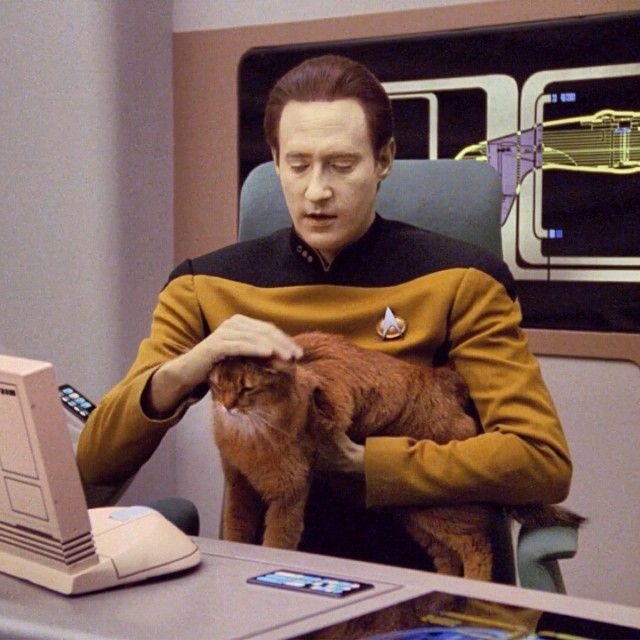
Sure, there are some halfway decent services that AI can provide, but all of them grow out of a business model that has little to do with empowering all humans. It has to do with empowering ethically bankrupt tech bros and funneling money from our attention into their pockets. So, that’s my take on AI. It’s got great potential to be useful, but it’s owned and controlled by people who do not have our best interests at heart. I’m going to use it from time to time. But I won’t pretend that it can love my kids or even be told to care about my kids. I don’t think that it can. It can’t affirm the humanity of my students. It can’t make art because it has no experiences. Art and creativity are artifacts of human experience, not mere aggregation of data. I think we are a long way from Mr. Data and his cat, Spot. If the AI was like Mr. Data and Spot the Cat, I’d be totally happy. Sorry, folks… that’s a Star Trek reference. I’m a nerd. Thank you.
The android Data with his cat, Spot. Star Trek: The Next Generation. Copyright CBS/Paramount
[vii] I know there are not formal diagnoses for “sociopathy” or “psychopathy.” Instead, the DSM-5 classifies them within the Antisocial Personality Disorder (ASPD).
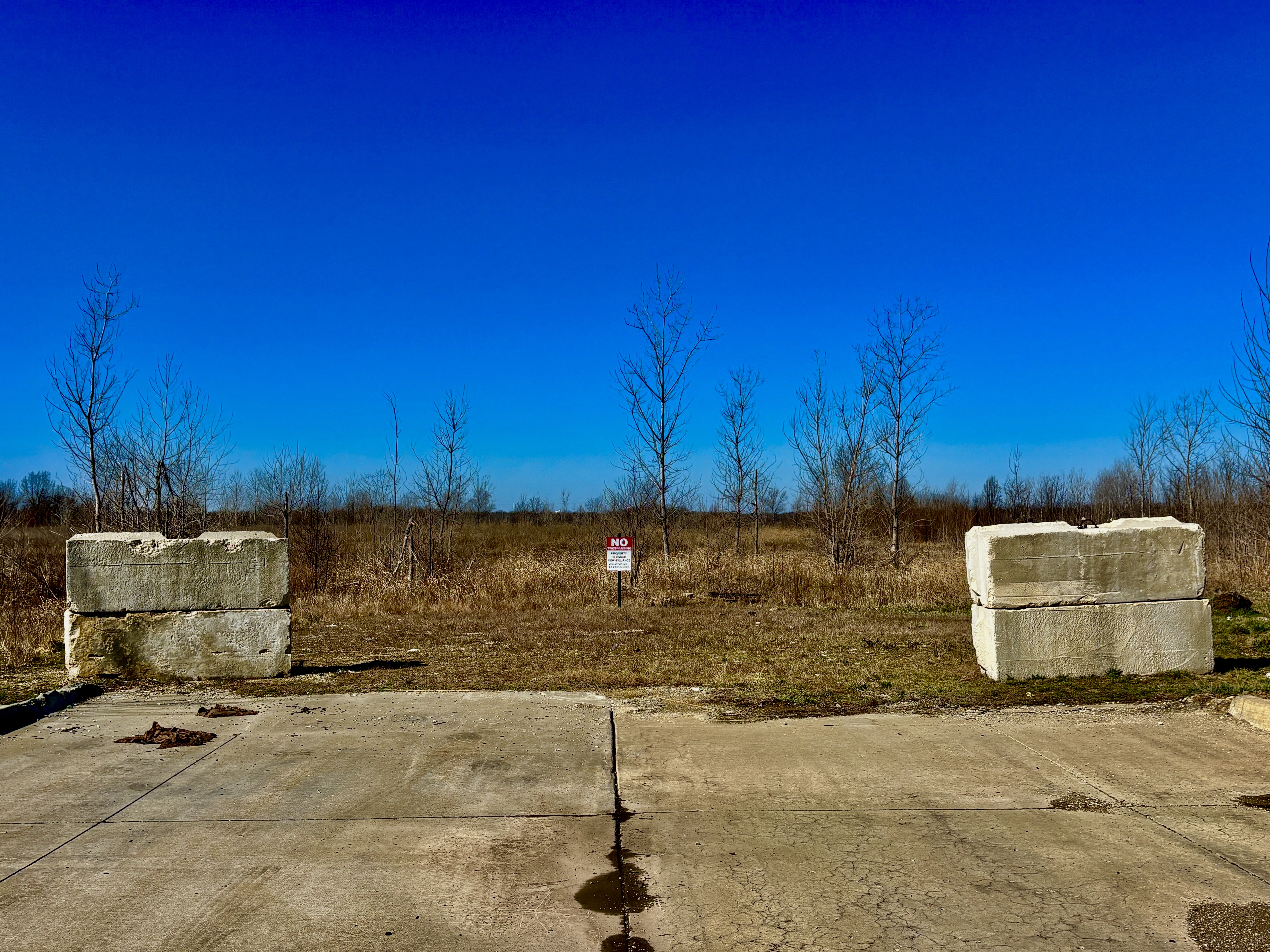
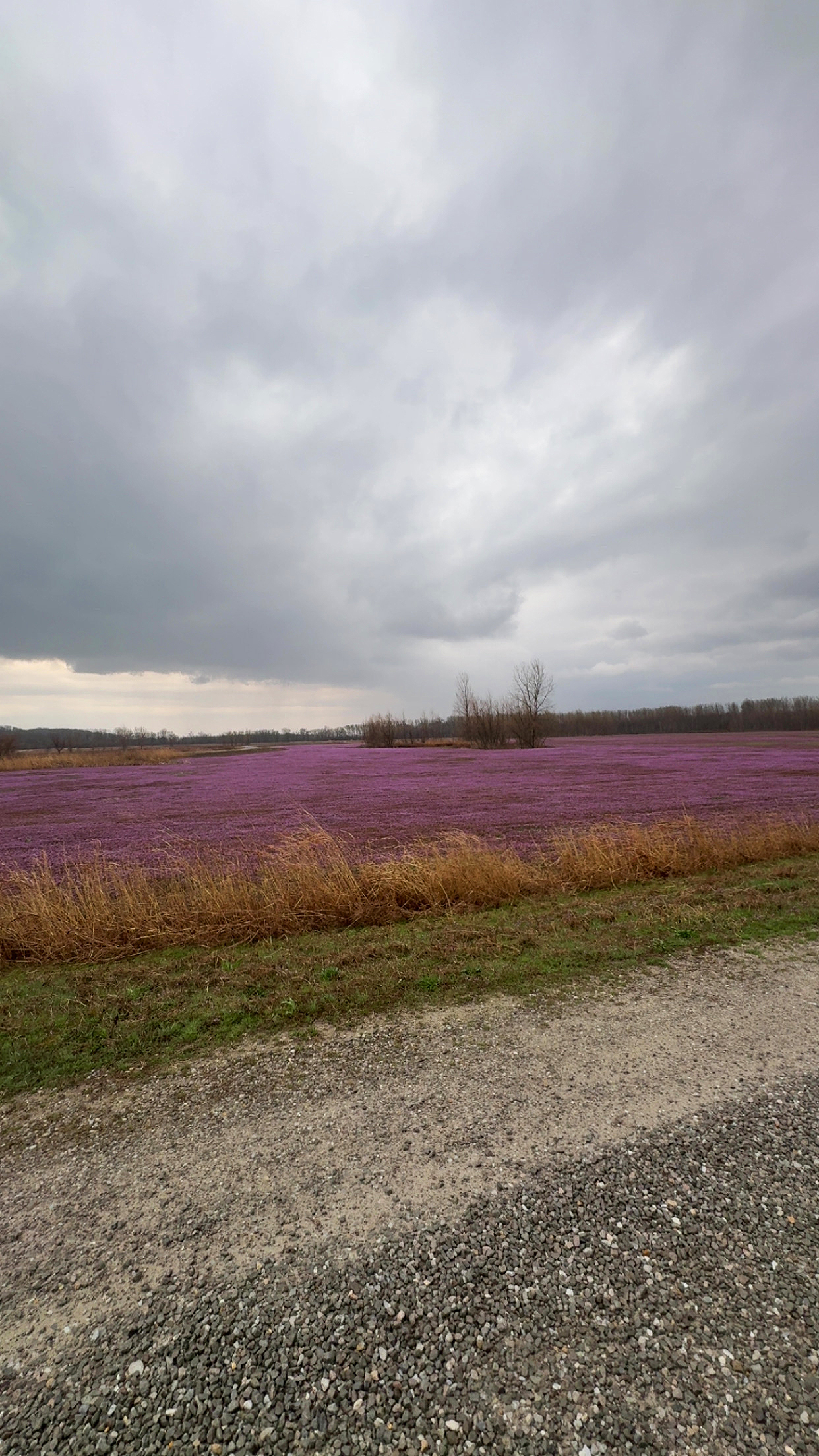
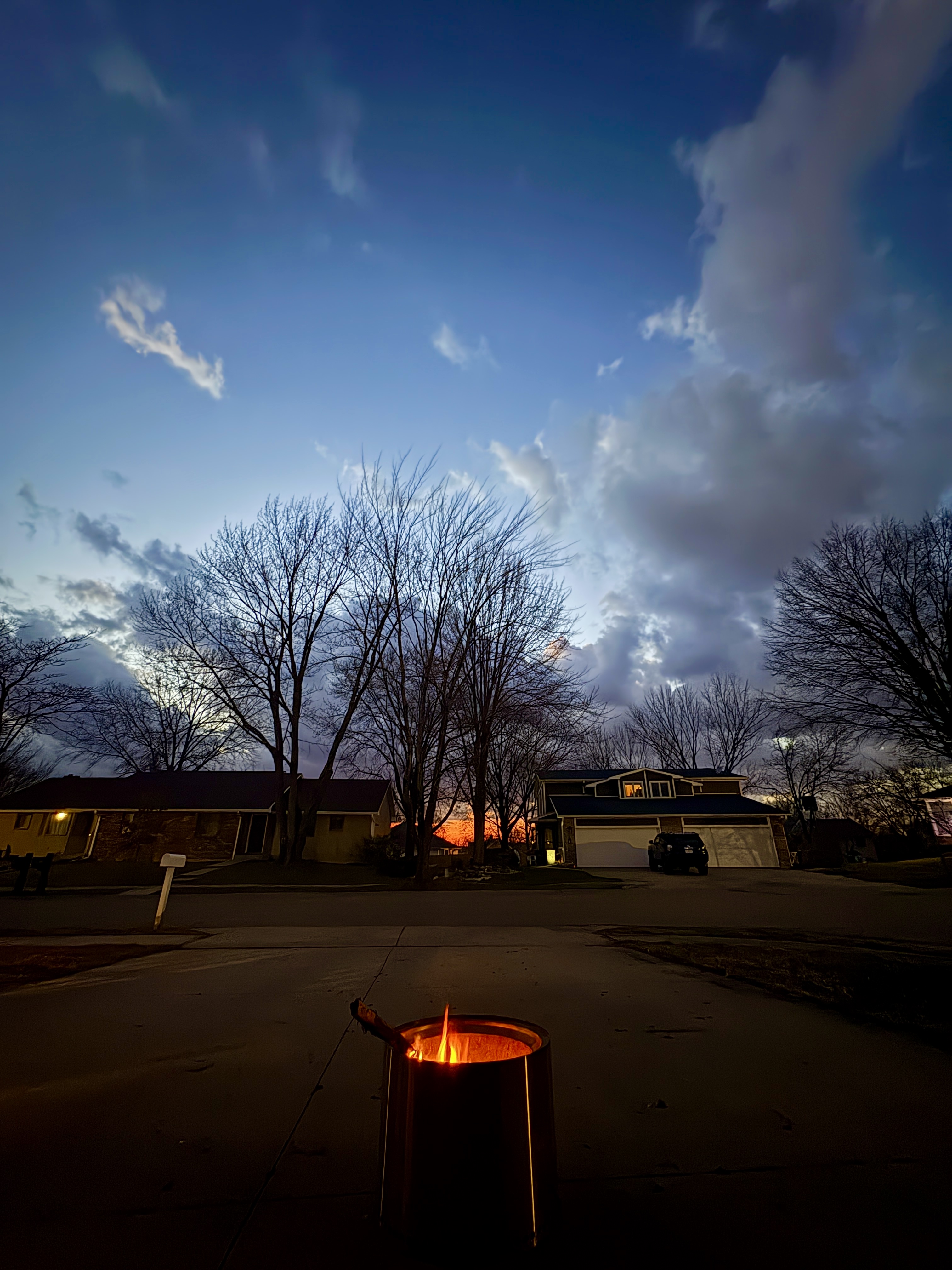
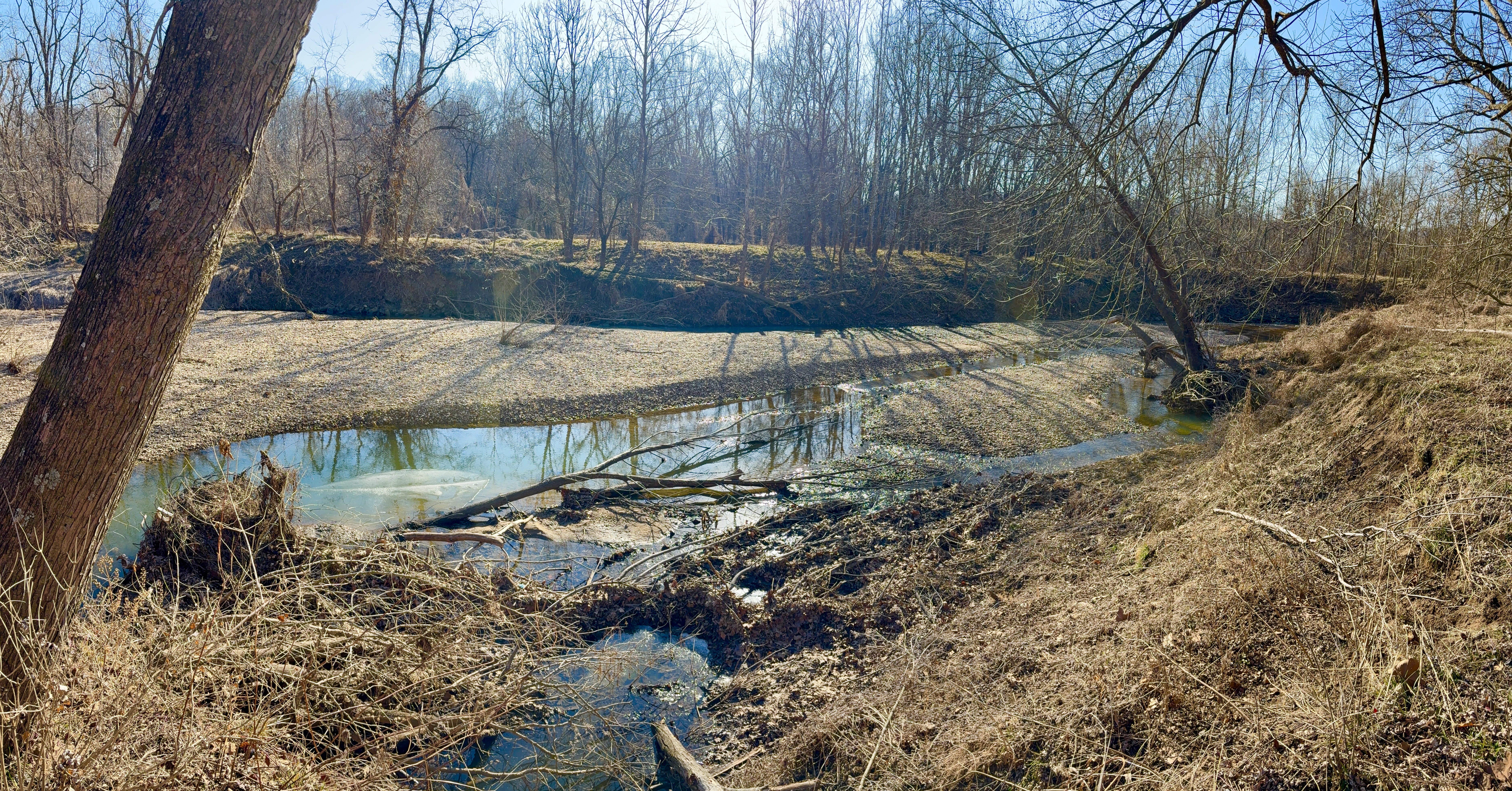
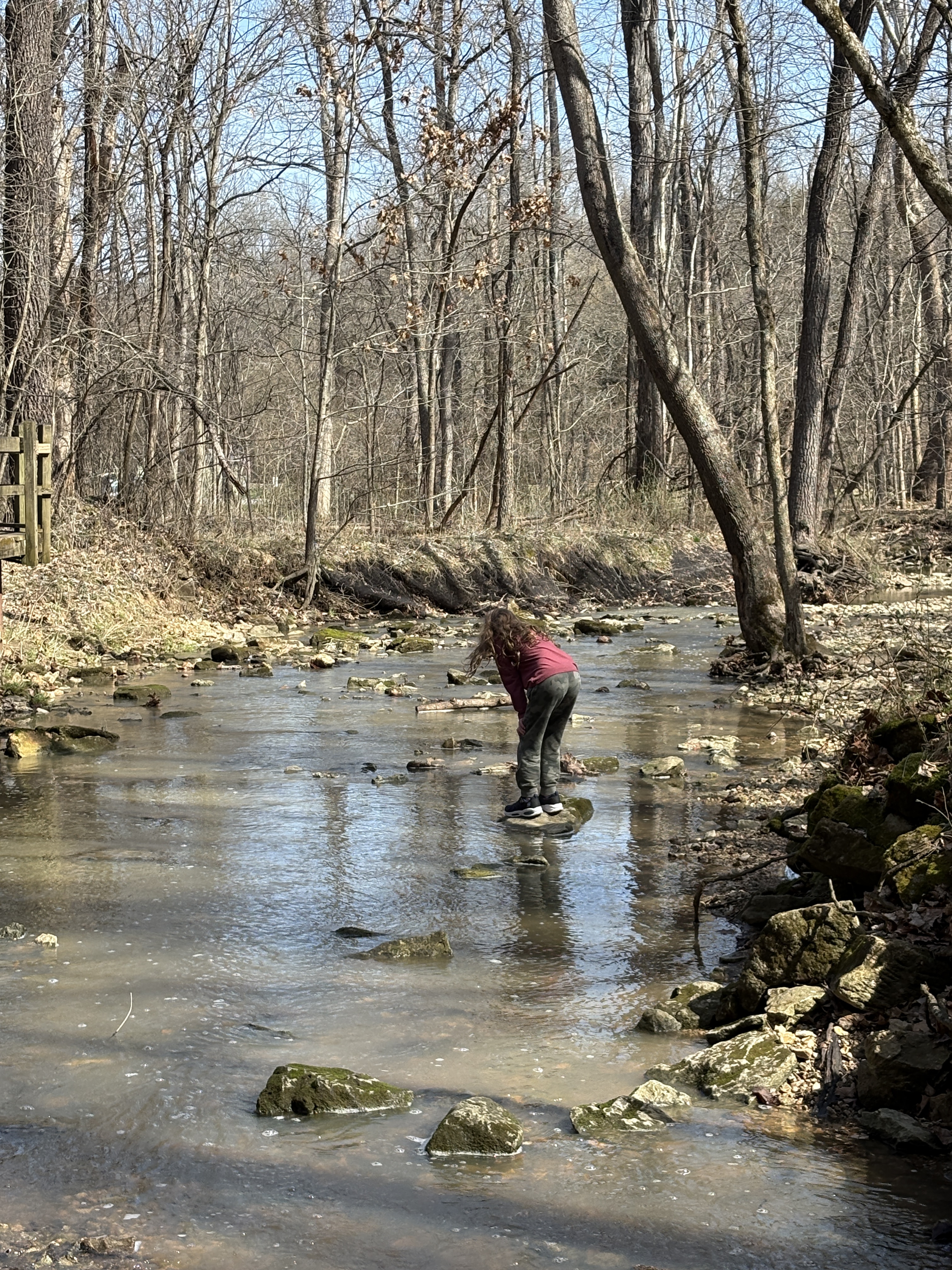
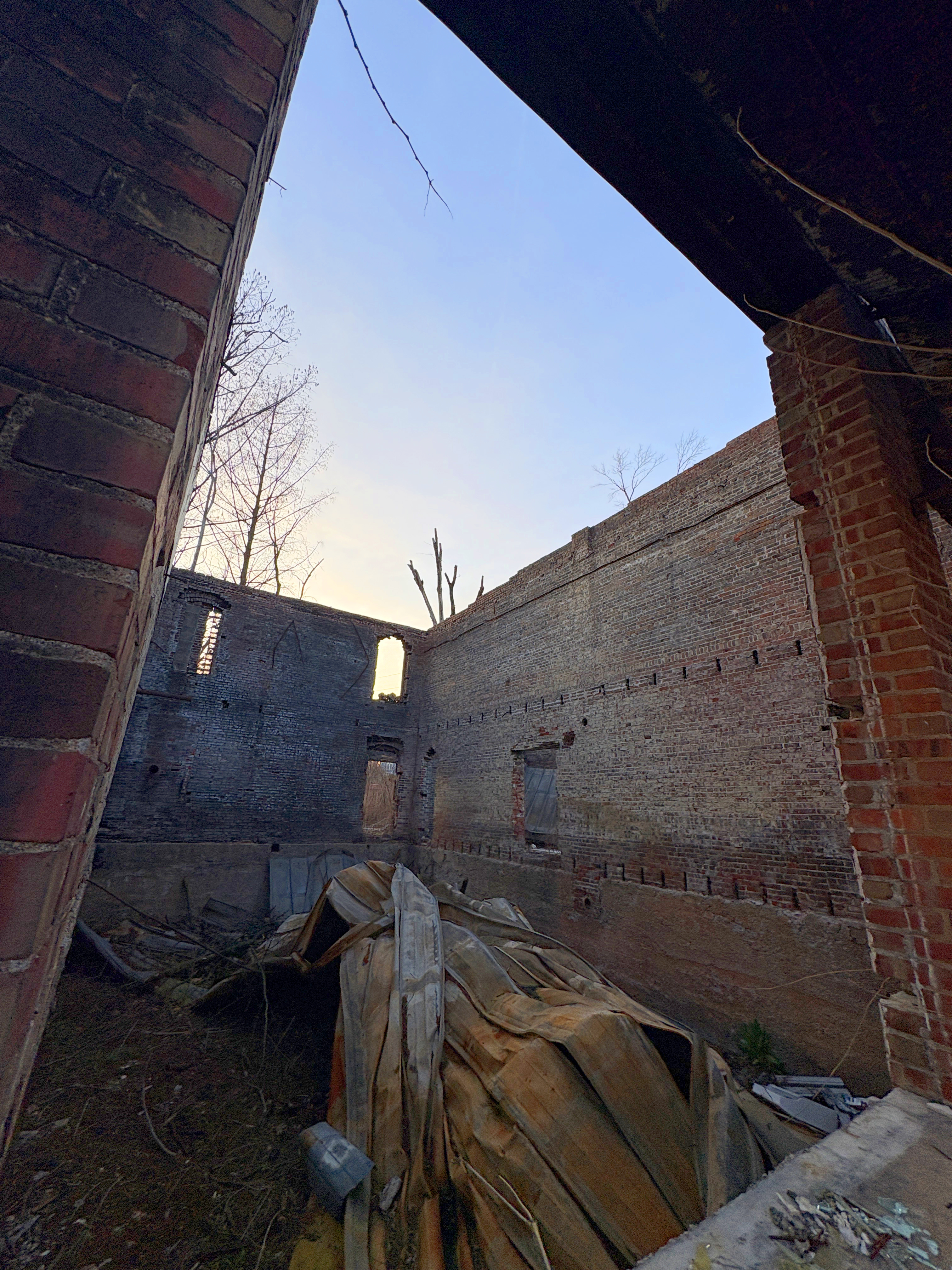
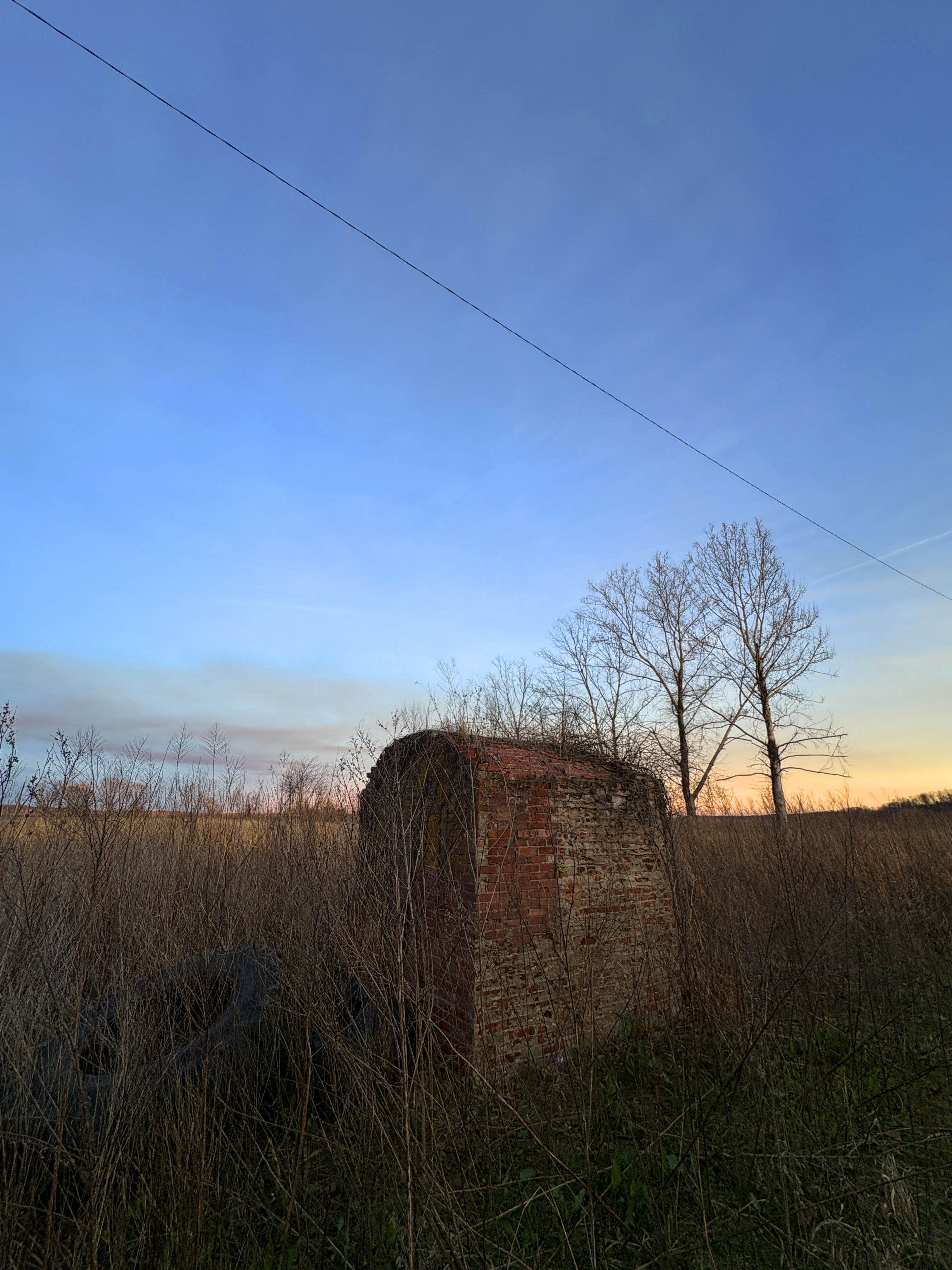
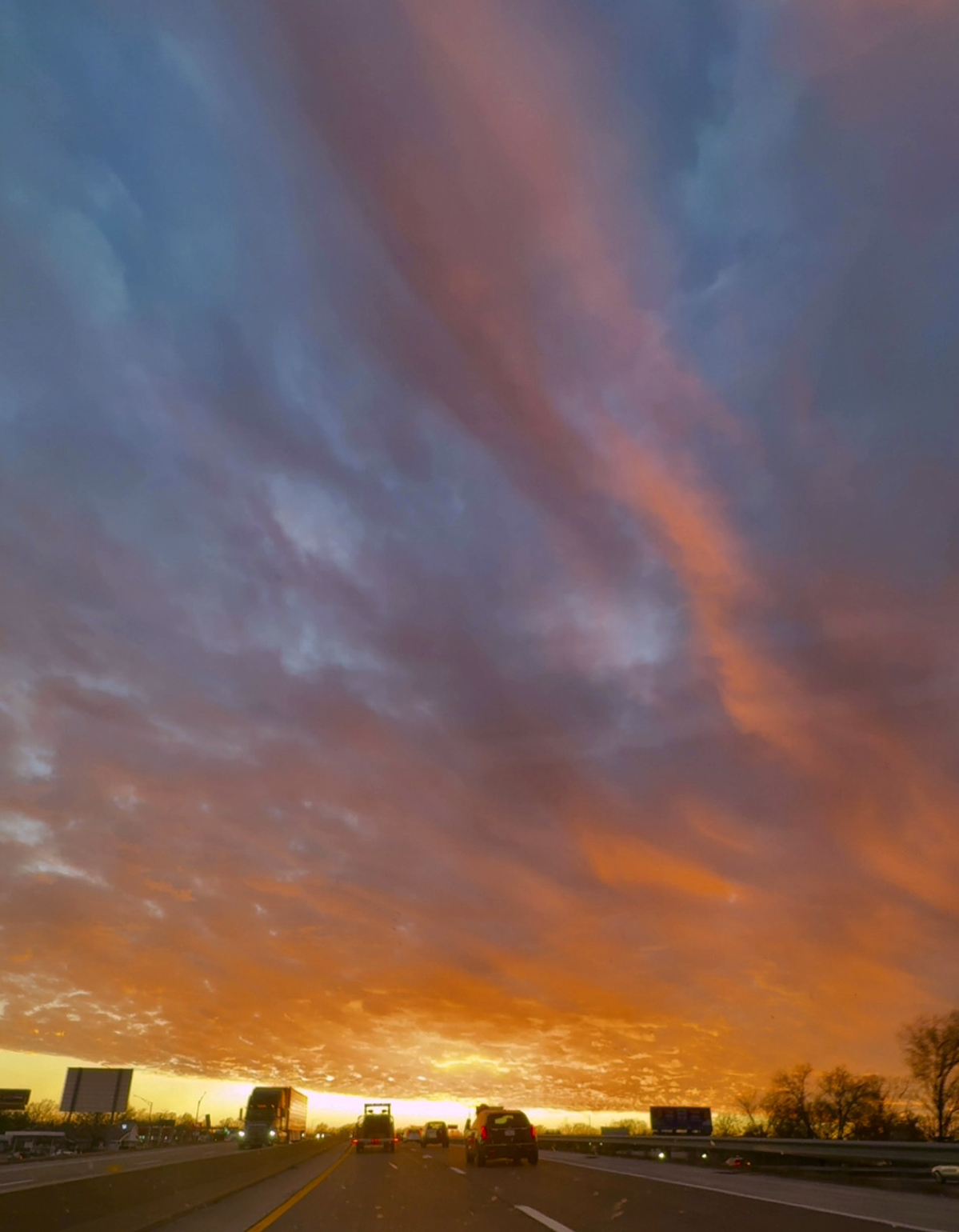
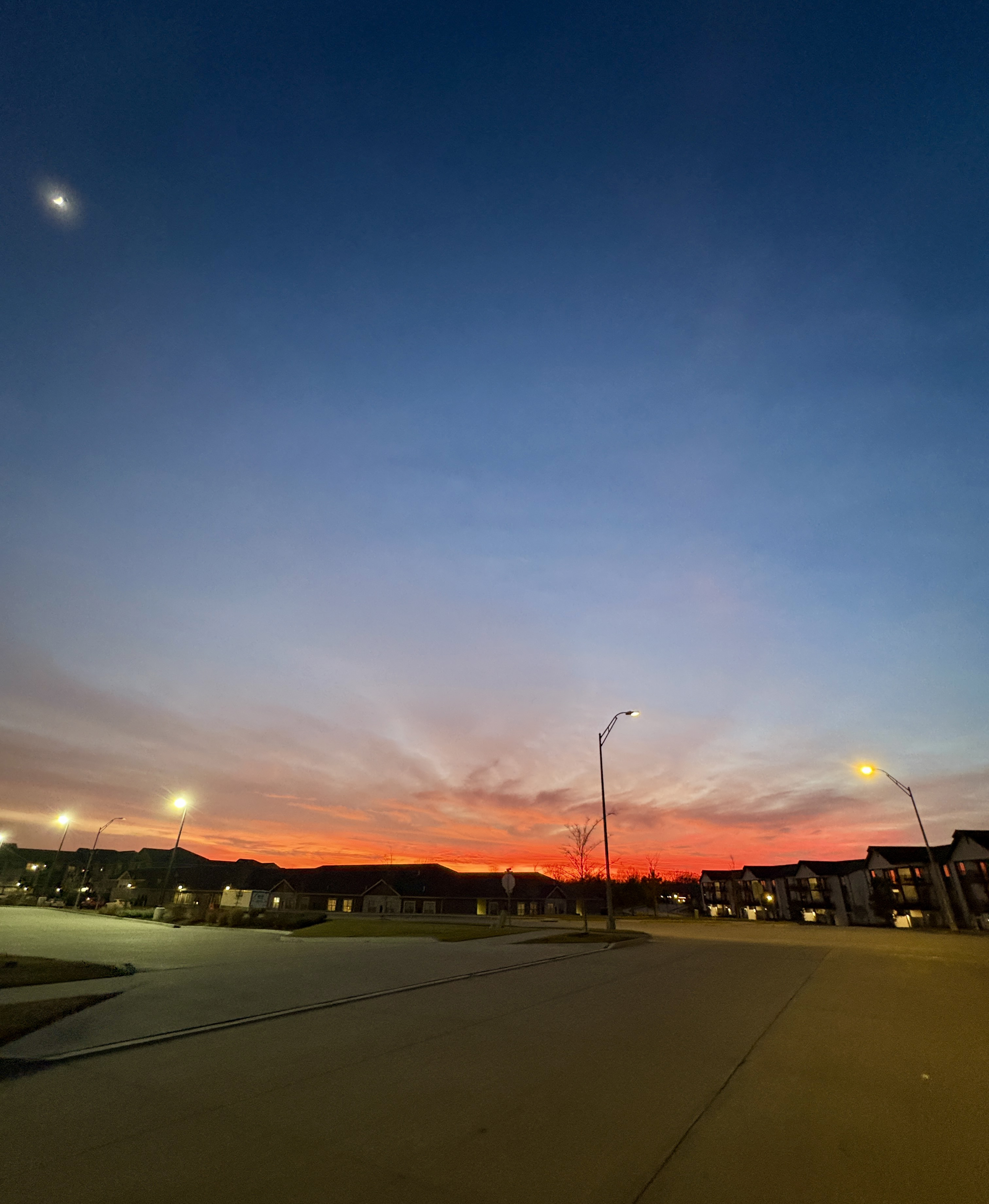
In spite of the horrors going on all over the world, and the constant barrage of idiocy from our leaders, 2026 has been incredibly aesthetically nurturing for me. The roads, fields, night skies, rivers, and clouds of Missouri are rich in color and drama. I felt compelled to leave a few of these views here for posterity. I’m thankful to get to document some of these things, and for the potent experiences and joys that I get to share with my friends, students, kids, and fellow humans.
No trespassing sign off Rangeline Road north of Columbia, MO.
Field of purple flowers during a rainstorm. Near McBaine, south of Columbia.
An evening fire in my driveway. One of my favorite ways to spend an hour.
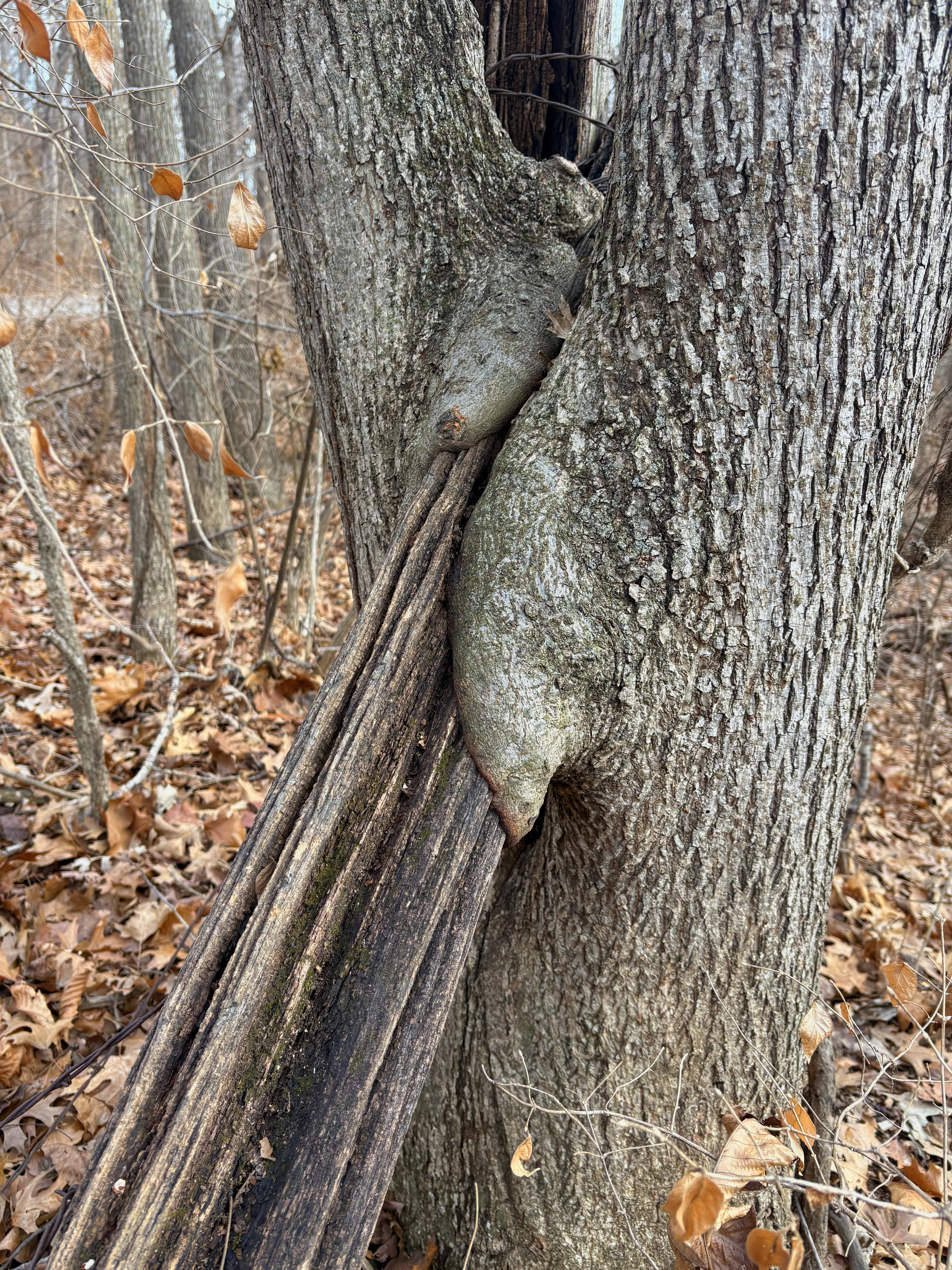
A tree grew around this fence post, enclosing it and carrying it along. Off Forum near the Katy Trail CoMo spur.
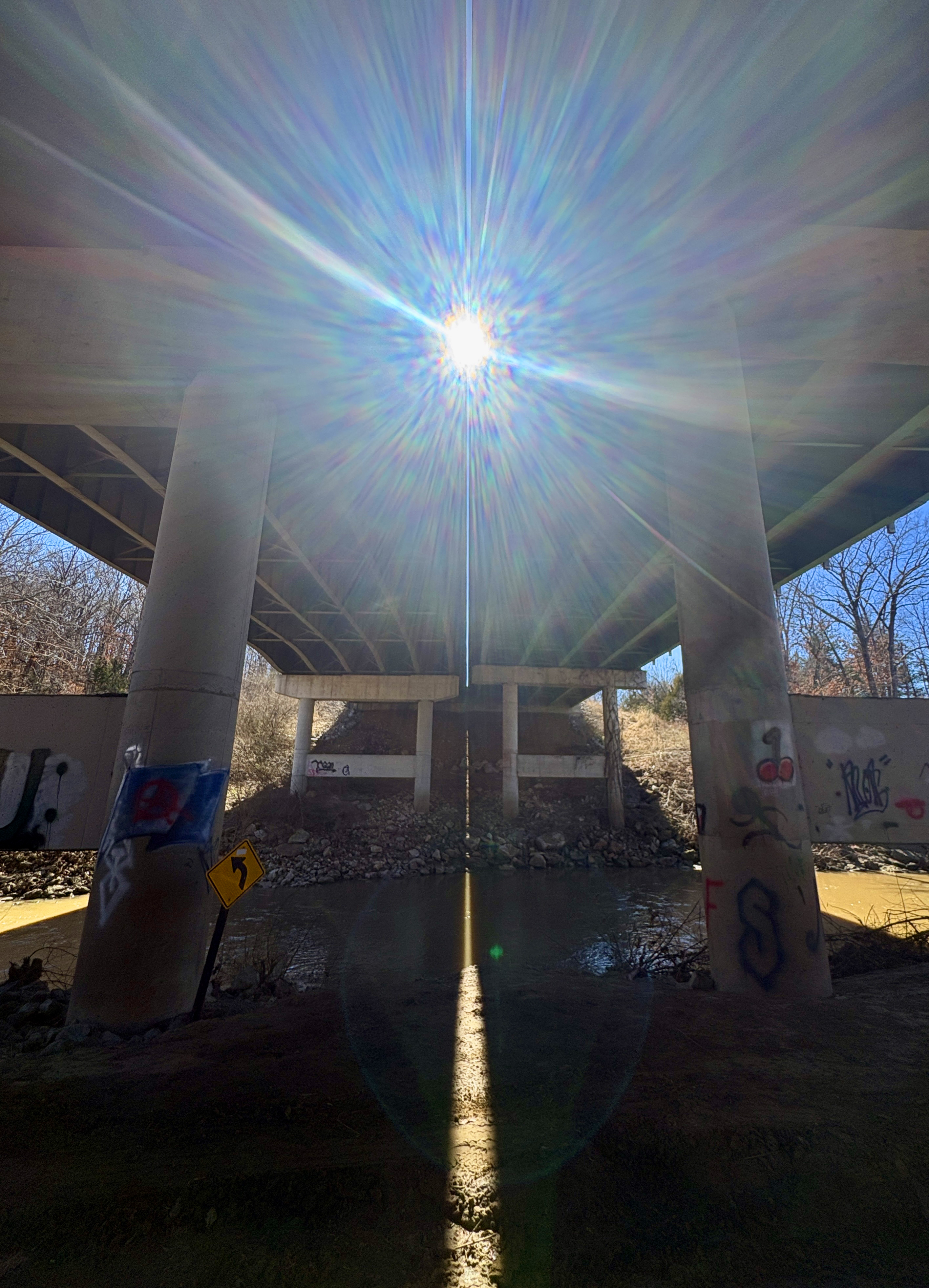
Sunlight shining between the two sides of the Providence Road bridge over Hinkson Creek south of the Mizzou football stadium.
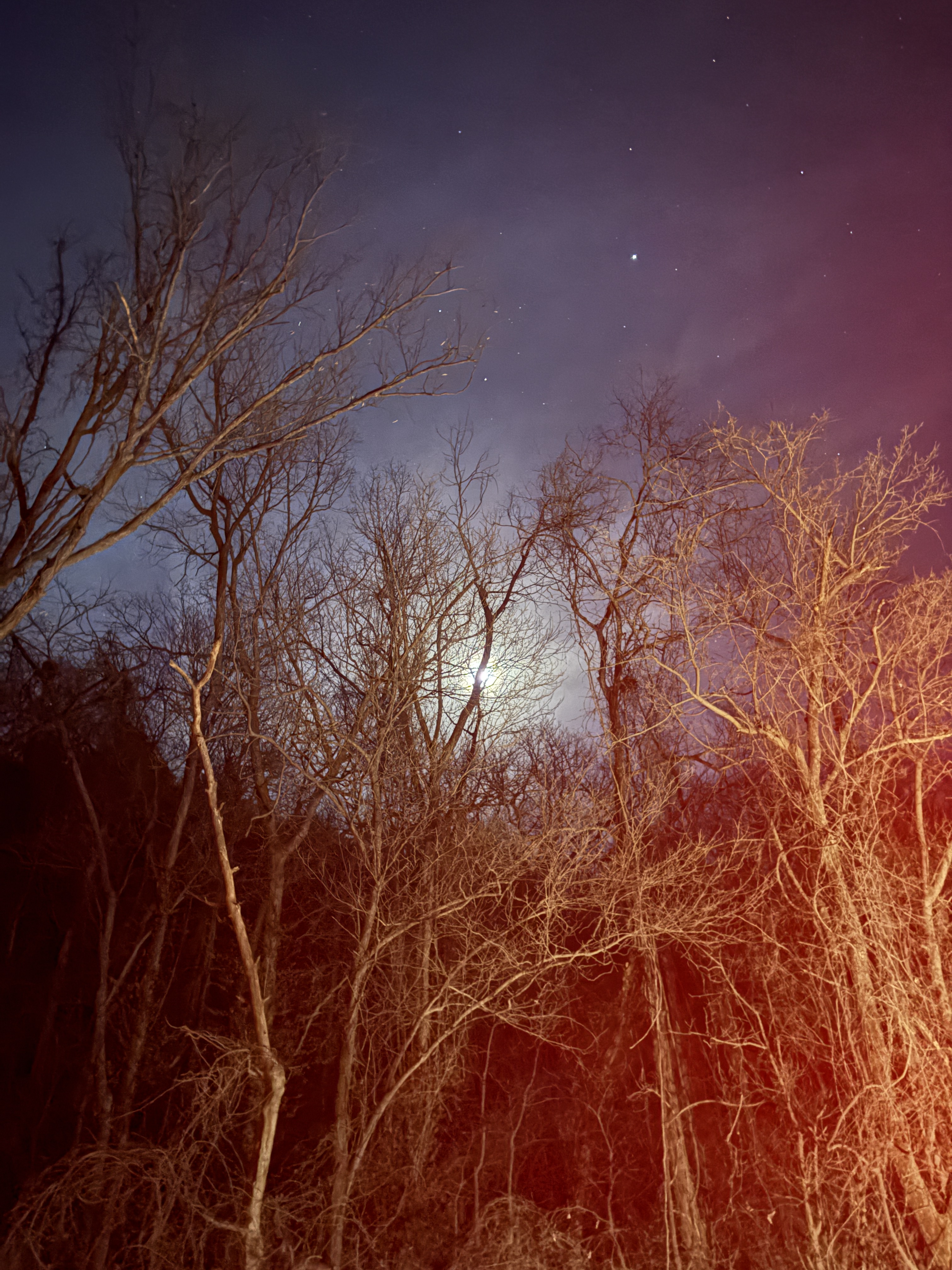
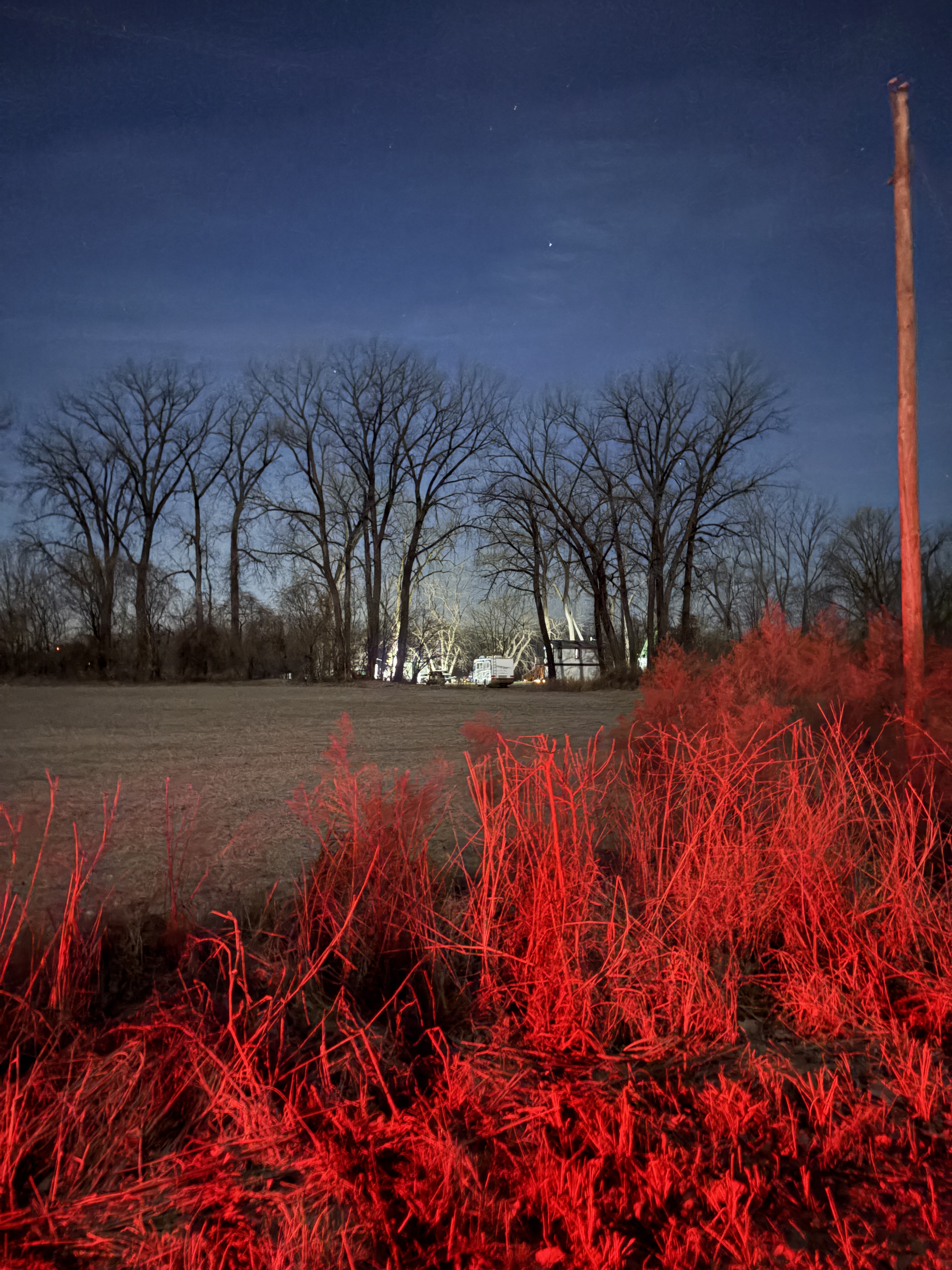
Two views from a night drive with my good friend Jesse. These were south of Columbia on dirt roads near Cooper’s Landing.
Hinkson Creek near the Grindstone Natural Area in CoMo.
My son, Atticus, enjoying some river exploration in the Devil’s Icebox area south of CoMo.
Another road trip with Jesse to find some interesting shooting locations for his next film project. Near Wooldridge, MO.
Sunset views in Mid Missouri – left is on I70 facing west – right is off Scott Blvd facing southwest.
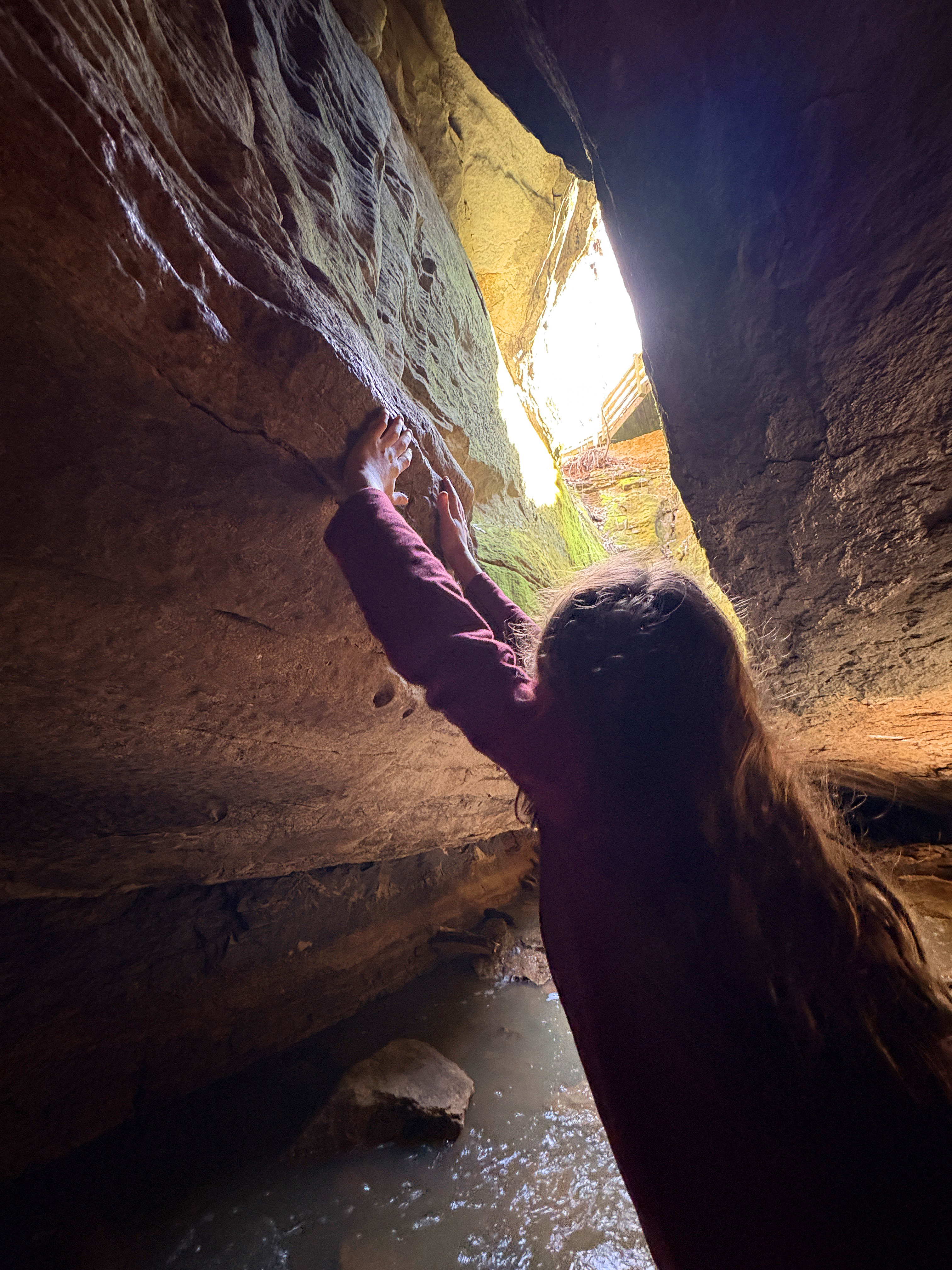
Atticus in the Devil’s Icebox cave area, looking up through one of the openings.
I’ve taken thousands of images so far this year. These are just a tiny sampling of my way of paying attention to what my eyes want to see. Many of the photos are just for documentation or to embrace the strange and wonderful things I see around me. I do try to refine some of them into artworks. I think we take for granted how ubiquitous and available photography is now, and most of us are very uneducated about how images work and whether what we are told are photographs are even real.
There’s a wonderful piece of writing by artist/writer/director Johannes Grenzfurthner over at Midwest Film Journal that talks about the importance of imagery that is established by the “physical trace” of real places, sights, and experiences. We now live in an era where images are being crafted “without physical reference.” Our job as embodied human beings is to be firmly committed to the fact of our physical existence. Photography – whether just snapshots, memory aides, documentation, or art – should be about OUR eyes, OUR living experiences. We should not give AI or tech bros authority over our vision of life.
On this day ten years ago I had a cardiac arrest. My heart was stopped for 10 minutes. I’ve written about this event every year on the Traumaversary, and I’m glad I have. Ten years. Every day I’ve been thankful. I’ve tried to make my life and my family better. I’ve tried to become a good teacher. Ten grateful years. Hard to believe that’s about 20% of my whole experience… all after that heart attack.
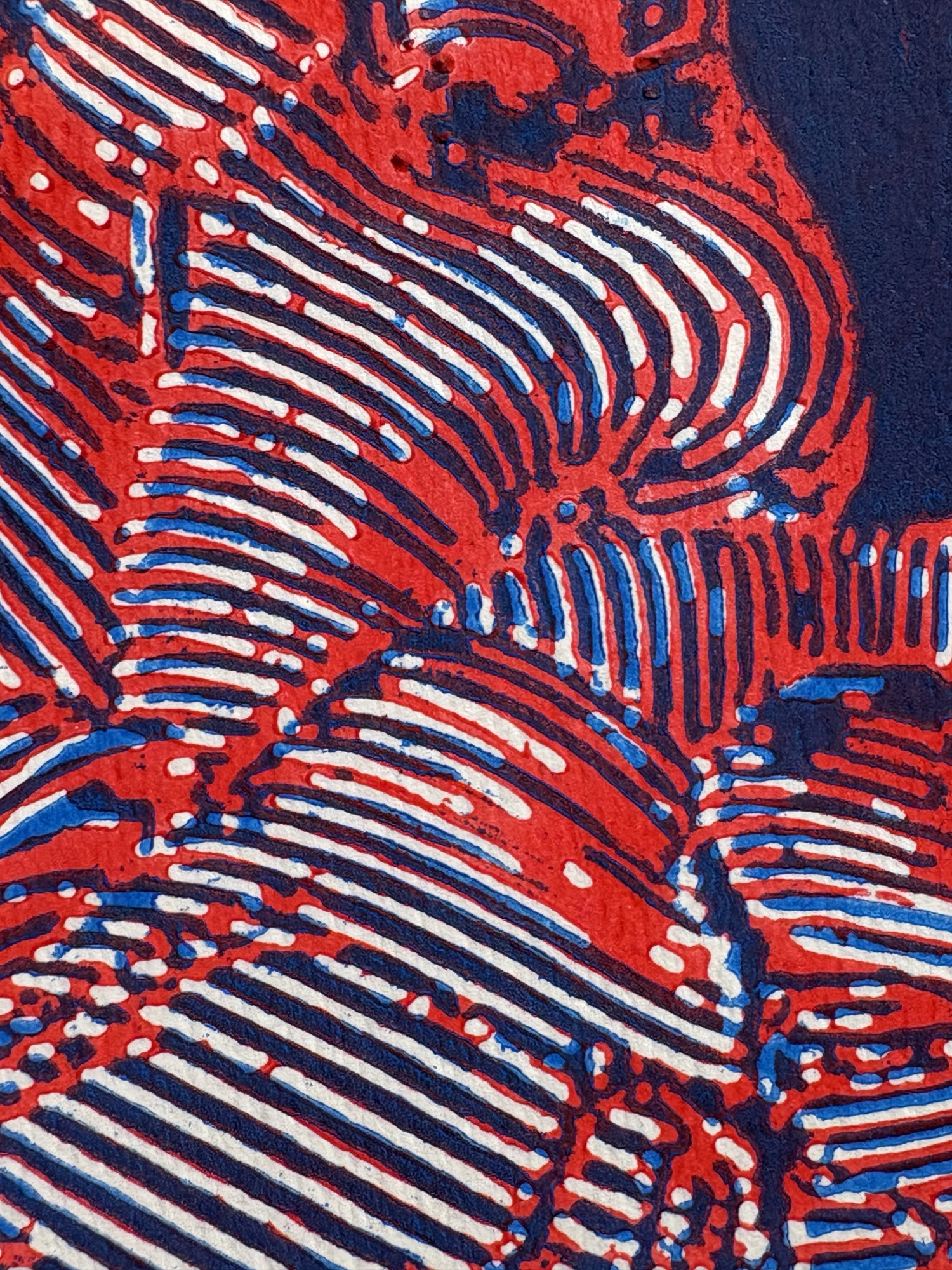
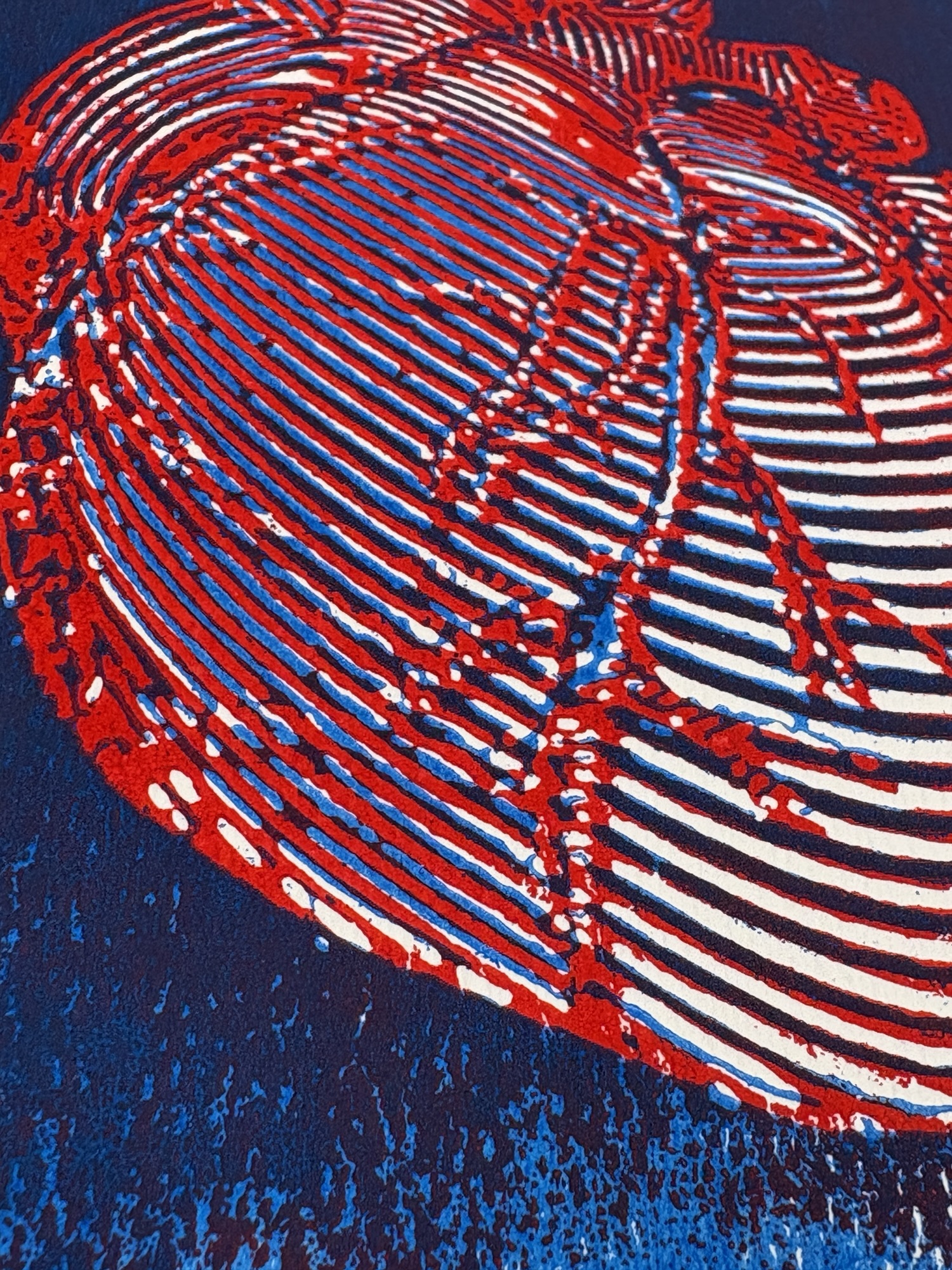
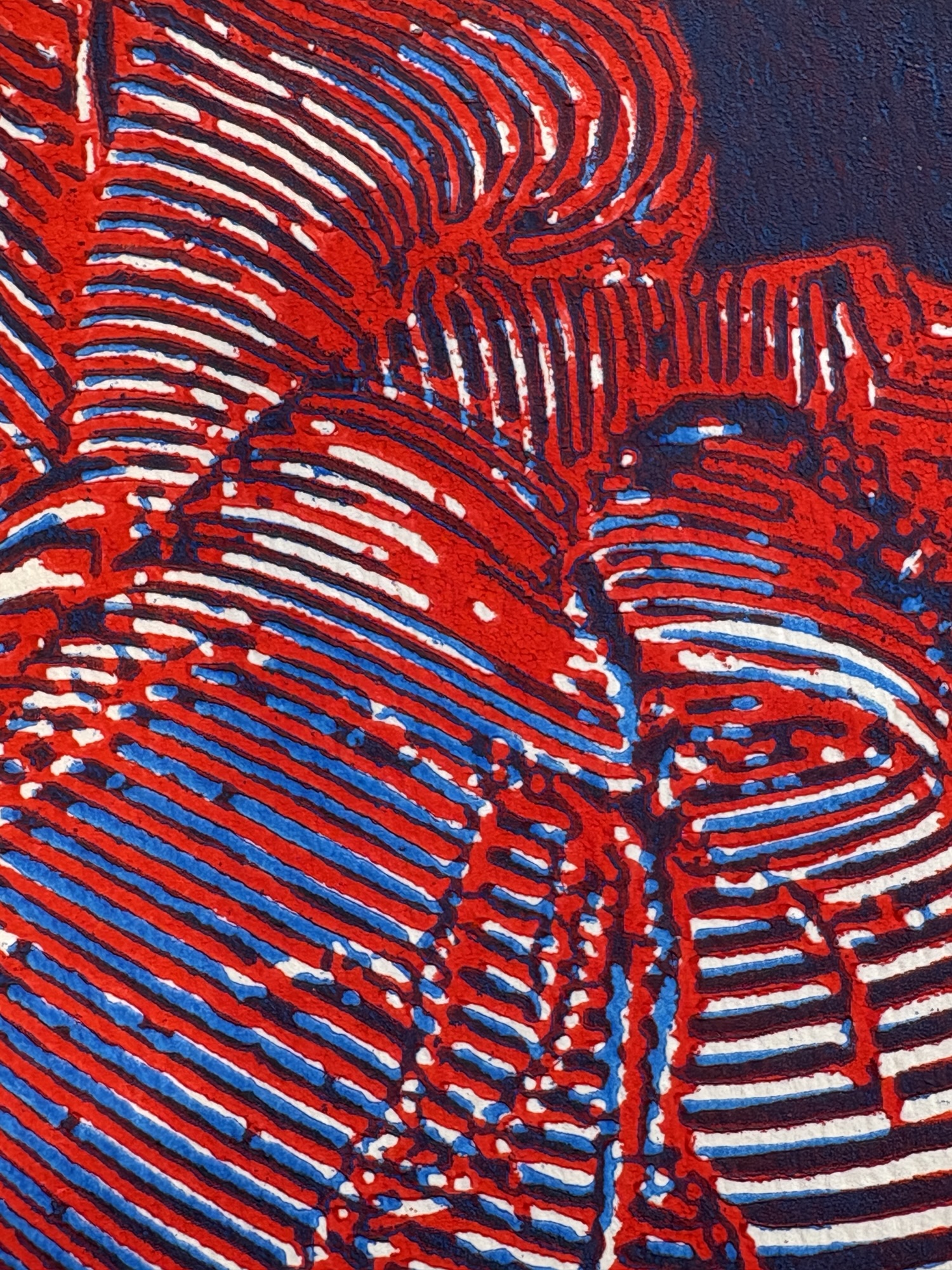
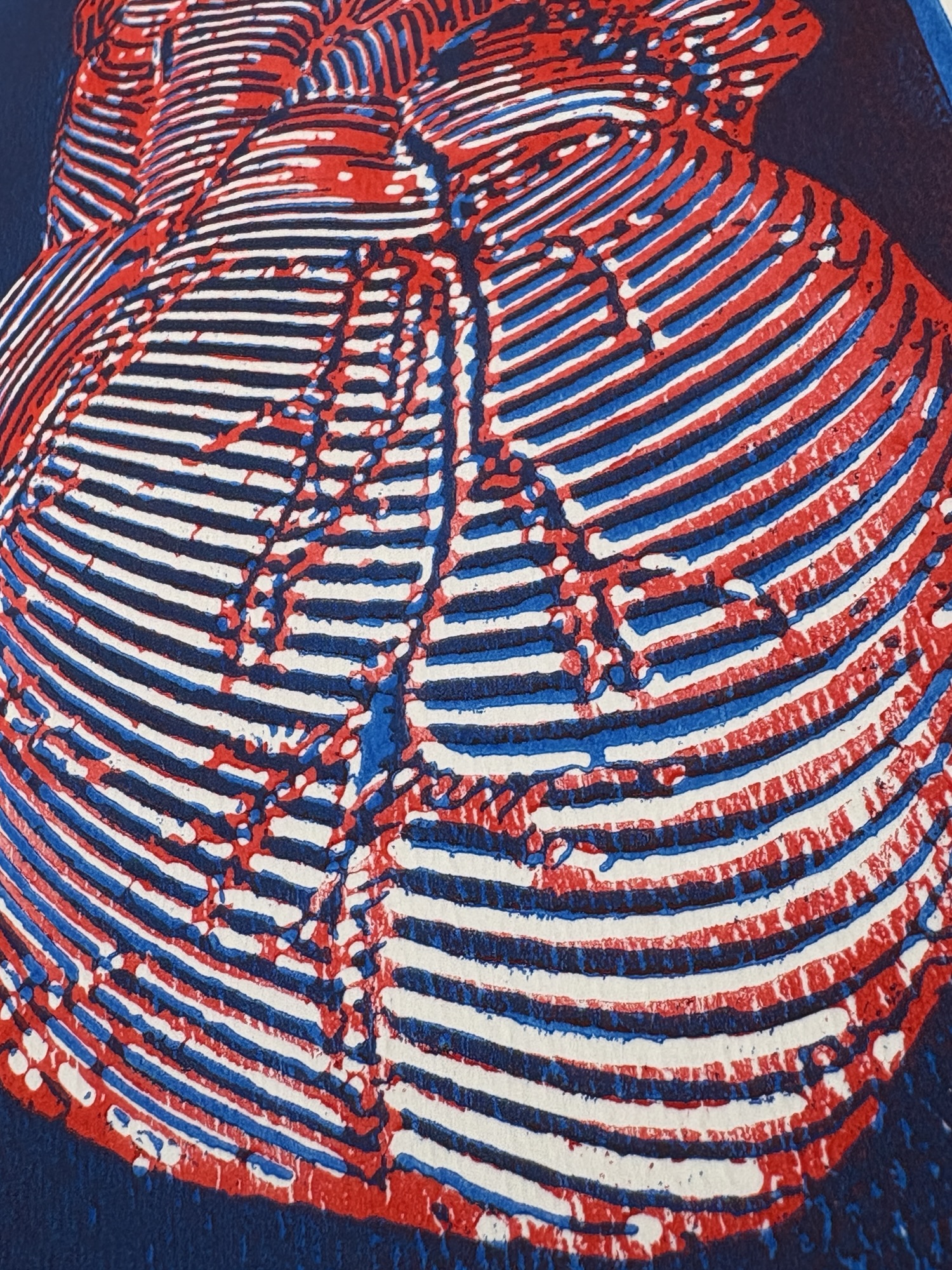
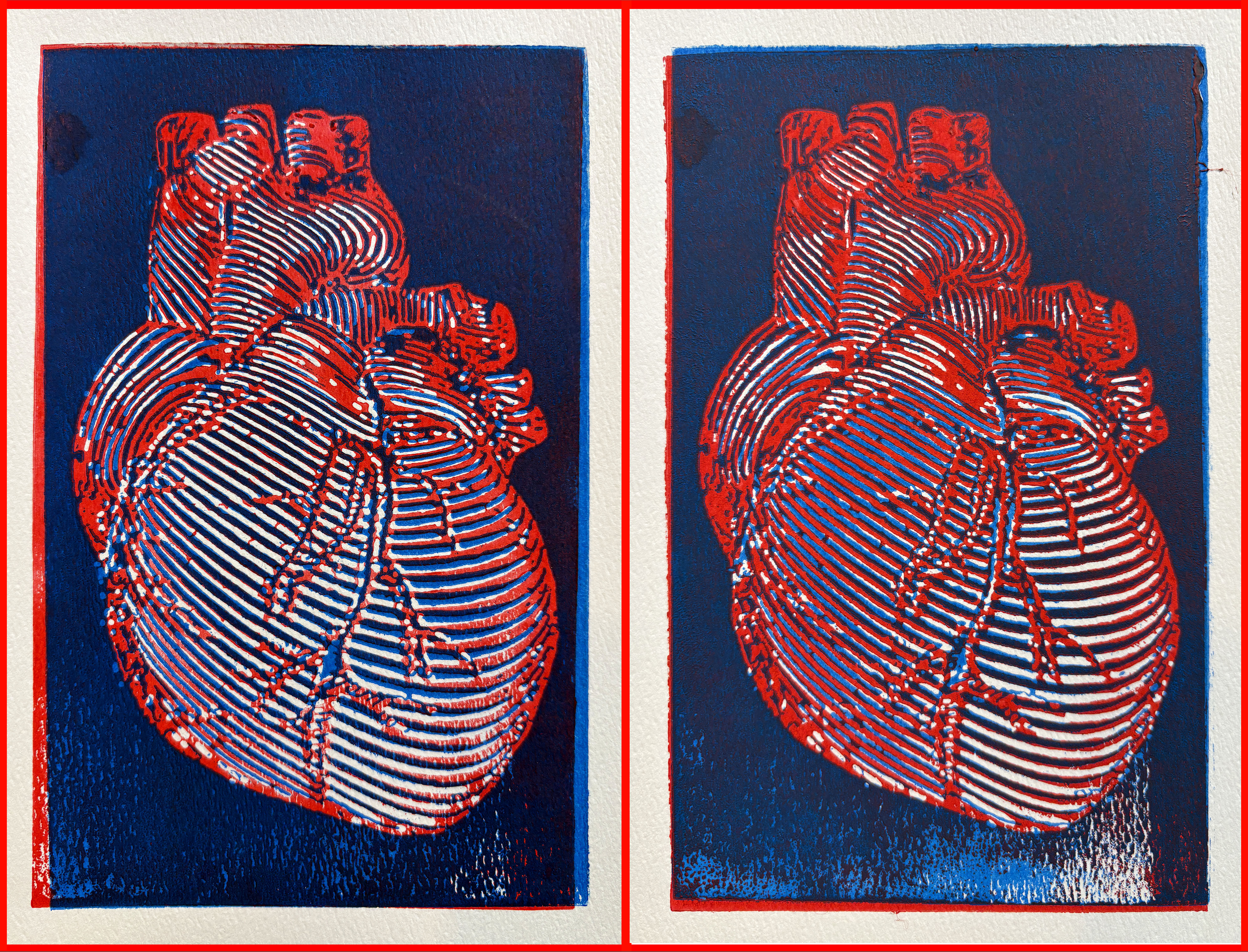
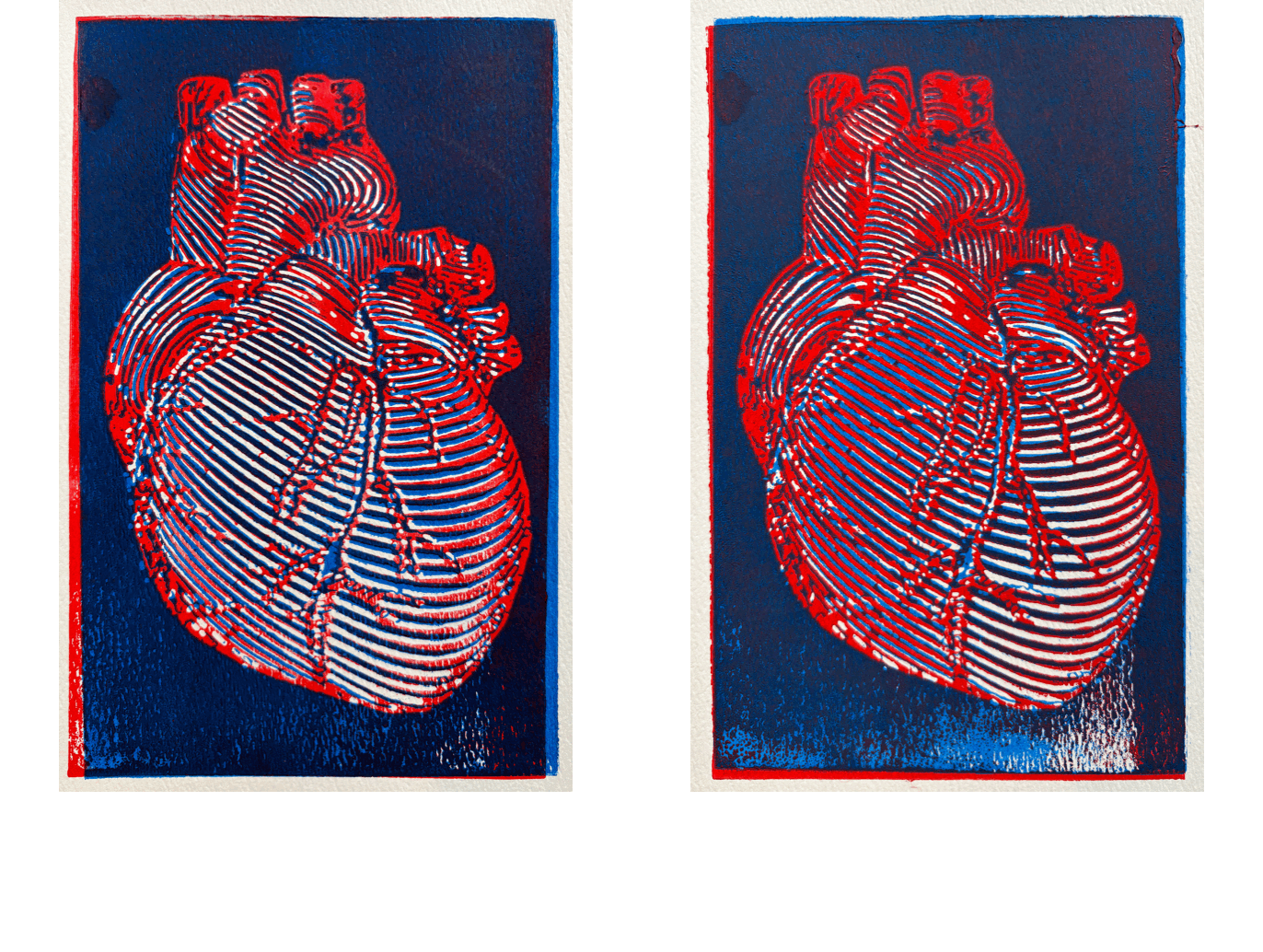
Above are two of my heart prints. These are two-block woodcuts , each printed in two colors (8.25 x 5 inches). The blocks are slightly de-registered so that they overlay and make dynamic line and color action over the heart. When made into a gif, they pulse like a real heart…
I feel extremely blessed to have been able to carry on, but also to have been transformed in many ways over this decade. I want to make the most of my time, convey a spirit of generosity and kindness, to be a good father and encourage my kids, to advocate for my students, to support my friends and colleagues… and to find more about beingness by which to be astounded. In a time when so much has gone wrong in this country and the wider world, I am still hopeful that when I leave this world I will find it to have become better, because I know that I have gotten so. Every day I find something to love, to passionately explore, to laugh with my family about – and that dual outpouring/indwelling experience is the great joy. I have been rewarded by my practice of attention over these years.
Every year is an amalgamation of the years that came before. While there might be touchstones and specific events keyed to one year or another, no year can be entirely of itself. So some of what follows is tied to this past year, but some of it is from outside of that temporal container. Regardless, I wanted to make a few notes about what struck me and what stuck with me this year without a whole lot of thinking about ranking or hard and fast lists. It’s good to take stock and look back so that the turning to look forward can have some context.
At a great party with former students in Rocheport, MO.
100 Pounds Down
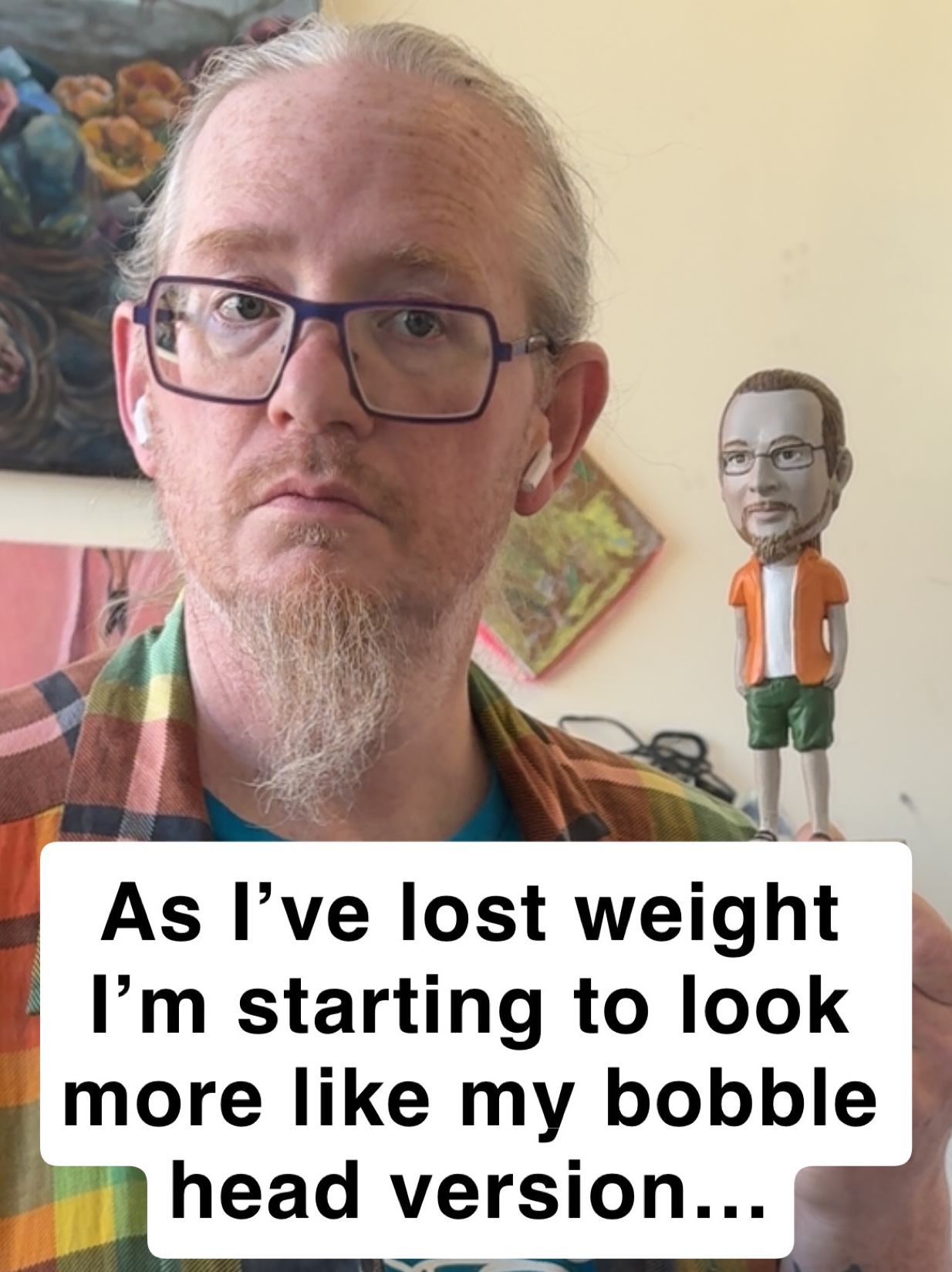
2025 is the year that I lost 100 pounds. On January 18, 2024, I was 291.6 lbs. Today, I’m 186.6lbs. This is a testament to medicine, determination, consistent workouts, and finding ways to manage my own instincts about food and drink and effort. But what changed in January 2024? Why do I think of that as the start of something new? That’s when I began to supplement my daily workouts, efforts to eat and sleep well, and overall stress-reduction with Zepbound.
What it did was take the edge off of my constant feeling of hunger… what many people describe as “food noise” in the mind. Zepbound was the little tweak that enabled me to no longer have an inner insistence that I endlessly had to fight. I felt satiated, FINALLY. My portion sizes went down. My need to just eat everything on the plate – or to have a double or triple portion – disappeared. All of that went away. It became much easier to control my desires in much the same way that antidepressants helped me focus on what was truly important for my family and for my life.
This tirzepatide medication enabled me to turn around years of baggage in my thinking and habitual activity. I was disciplined with working out for nearly a decade, but I still struggled with knowing that it was time to stop eating or drinking. With Zepbound, I was able to do what I needed to do and hear my inner rational voice about what was important. It has definitely been a life changer. My whole world is so much better. Without that extra 100 pounds everything – working out, teaching, playing with my kids – is so much easier and more fulfilling. My knees, ankles, and back feel DECADES younger.
In The Ear and Eye Holes
Another great aspect of 2025 was experiencing (or re-experiencing) some amazing podcasts and movies from a bit of a different perspective. One of the things that I did was watch a bunch of vampire movies with Miranda, my oldest daughter. Seeing those films again (starting back with the original 1922 Murnau Nosferatu and then watching the 1979 Werner Herzog Nosferatu, not to mention a half dozen others) was a unique and dynamic endeavor. It was wonderful to watch those monster and horror movies with Miranda (and sometimes some of her siblings), ask her about her interpretations, and explore how she was understanding all of it. I greatly enjoyed the Robert Eggers 2024 version as well (but I didn’t take my kid to watch that one).
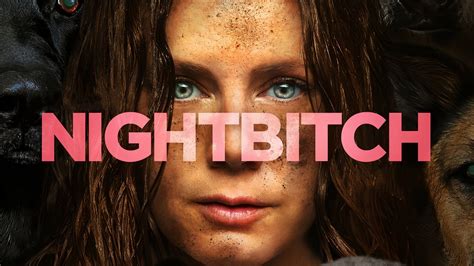
Another powerful experience early in 2025 was when I watched a movie starring Amy Adams called NIGHTBITCH (2024). Based on the novel by Rachel Yoder, it’s “a magical realism-style story of a stay-at-home mom who sometimes transforms into a dog.” I encourage everyone to go watch it. It’s about embodiment, change, parenthood, meaning, self-actualization, and hope. Such a great movie. Amy Adams goes SO HARD in this film… an award-worthy performance.
Amy Adams in NIGHTBITCH
Movie Highlights: Watching The Shining with my kids and seeing Eggers’s Nosferatu in the theater with Jesse. Experiencing NIGHTBITCH on a whim.
In the podcast realm I enjoyed going back through the Futility Closet podcast episodes. This phenomenal podcast is no longer is being produced, but that doesn’t mean they’re out of date or stale. The married team of Sharon and Greg Ross made 365 episodes, then called it quits. The episodes are infinitely re-listenable, there are NO ADS, and the opportunity to be astounded by the world and get inspired to research events is just solid gold. I’m almost done with a full listen-though in 2025, and it was so worth it. Futility Closet really is a cohesive account of global culture and what we try to do as human beings. The writing and the presentation overall are very much accessible. This is not highfalutin fare. It’s not the multi-hour-long episodes of people like Dan Carlin, not a dry lecture about history. Futility Closet gives you tight 30-minute episodes that hit on the main takeaways. They give you the backbone, all the resources so you can look up more, and they’re just really personable, sweet people.
Music in 2025
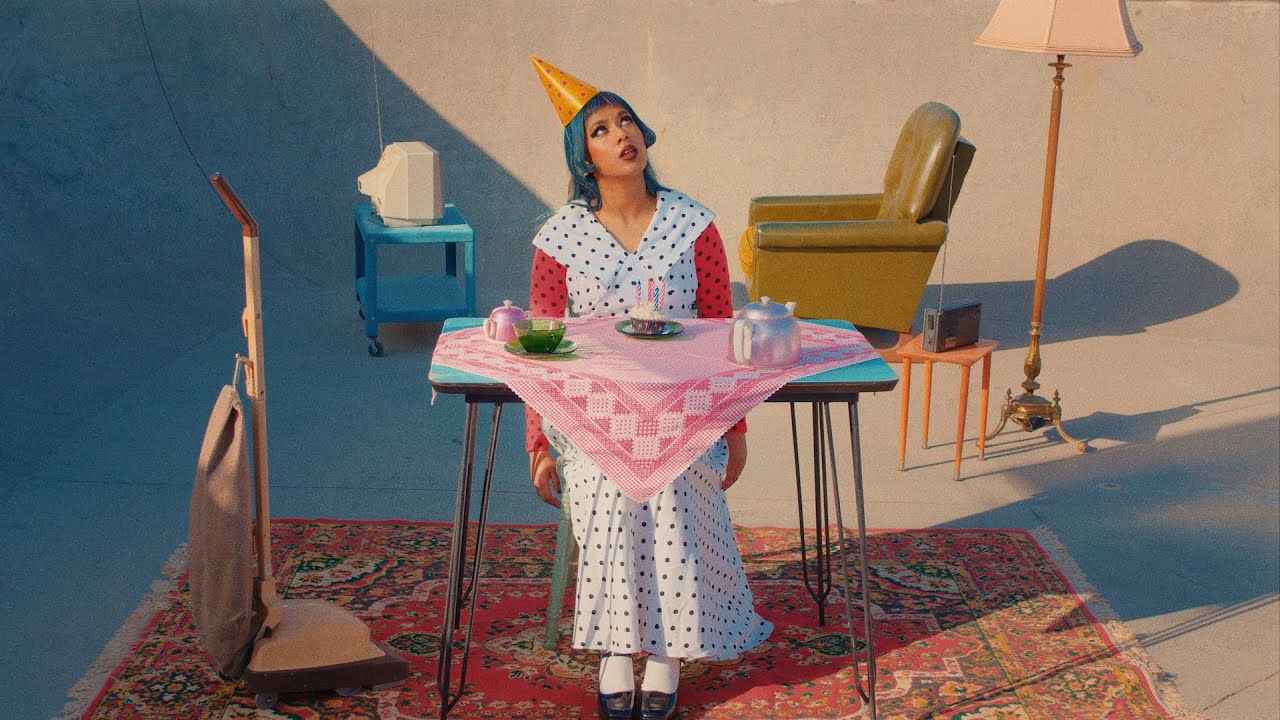
My students get me hooked on so much good music. This year, these are the heavy-hitters that stuck in my studio rotation. I’m not ranking them, just telling you to get on the train and listen.
Ecca Vandal
Key: Band/Artist – My Suggested Description of Genre
One of my great joys is teaching. I love working with my students and seeing what they do when they graduate. In 2025 I saw one of my grads, Andrew Long, graduate with an amazing thesis exhibition and text, then immediately get a great job.
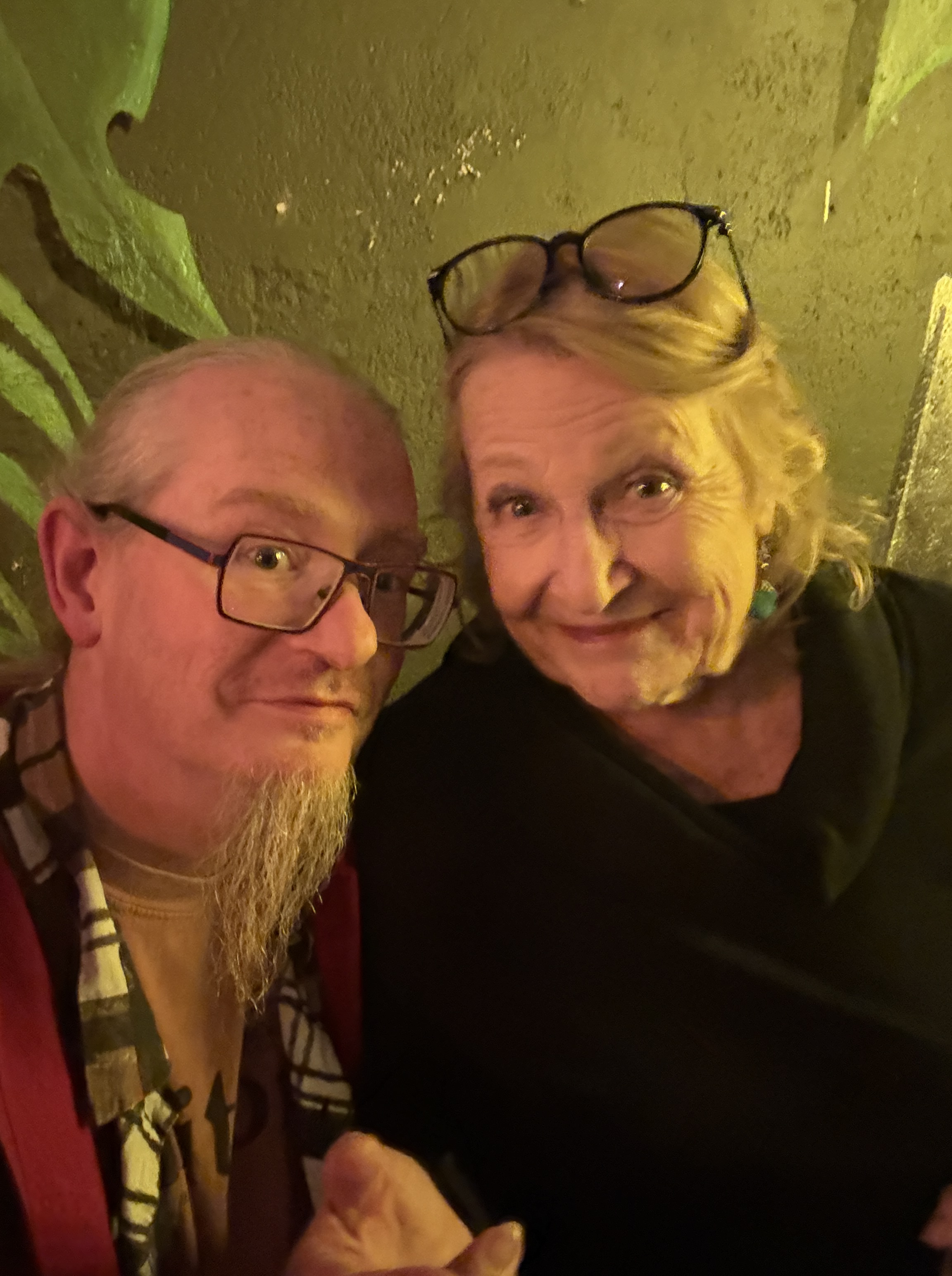
Me and Dr. Kerr at her retirement partyIn deep conversation with Andrew at a conference
Another transition was the amazing Dr. Barb Kerr retiring after nearly 50 years of teaching and scholarship. It was an honor to be at her celebration party. She’s been such a mentor and inspiration to me.
RIP Dad
My dad passed this year. He was 83. For years I wrote to him with photos and updates in physical letters… and now at least once a week I think “I should write to Dad” only to remember that he’s gone. I’m glad he lived on his terms and did just about everything he wanted to do and not much that he didn’t. And I’m glad I got to speak at his funeral and give him the send off he wanted.
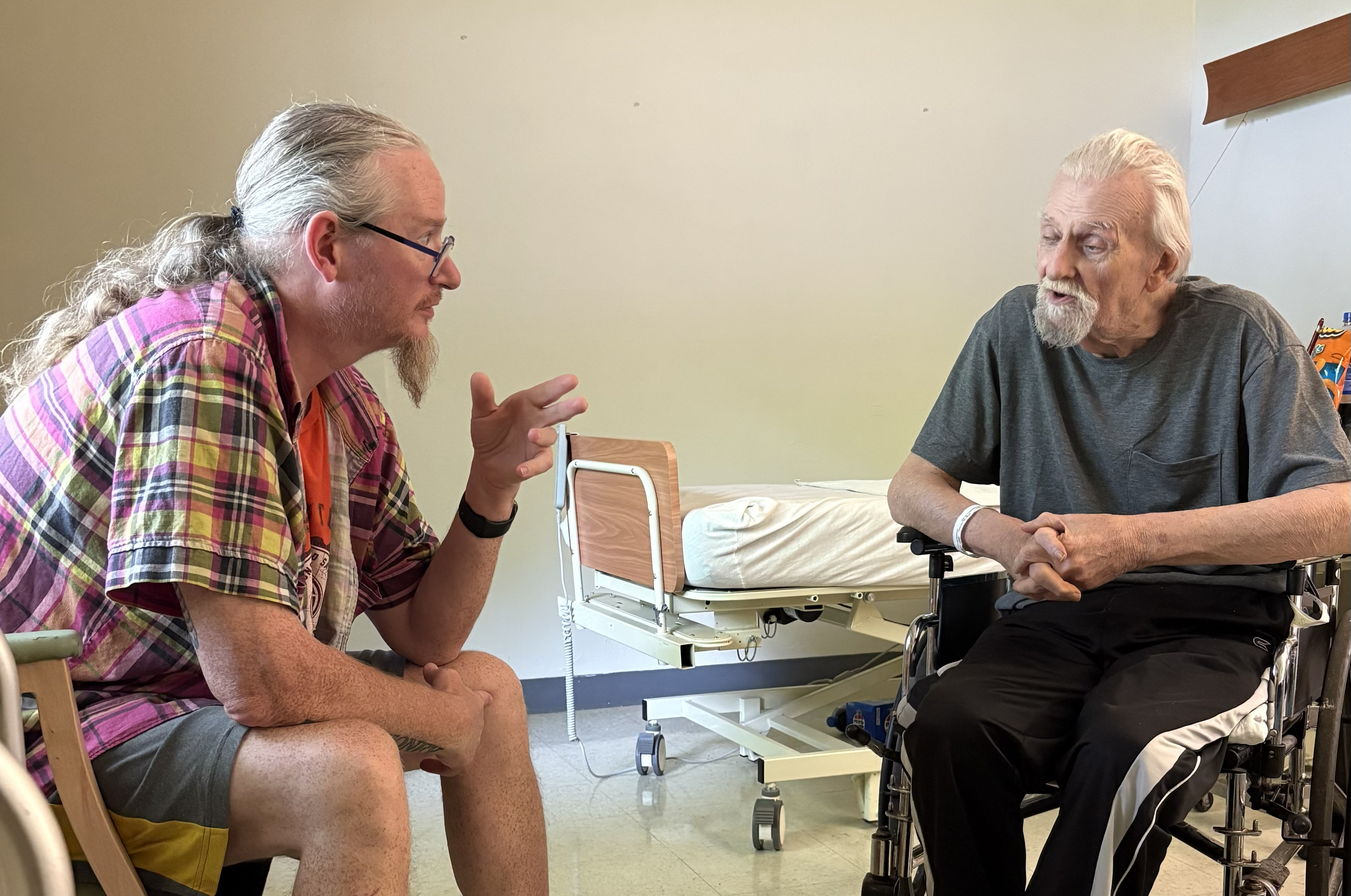
Speaking at Dad’s burialOne of the final conversations we had
Thankfulness
One thing I’m taking away from 2025 is the understanding that I was able to have positive growth and a grateful mindset in my family, job, and art-making in spite of the horror show going on in the world. Straight up state-sponsored murder and genocidal activity on one hand, and obvious grift and obfuscation of the truth on the other, all wrapped up in nationalism and religion. It’s enough to put anyone into a high stress crash-out. But I’m thankful that I’ve been able to find a balance where I can be informed about that stuff and take steps to counter it in my own small ways (as a parent, educator, and community member) without letting it put me in the ground. In 2026 I want to keep living with hope and joy, not through some abstract pie-in-the-sky platitudes, but though real life with my family, honest interactions with my students and colleagues, and deep exploration of ideas and meaning in the things I read, watch, write, listen to, and make.
Over the last five or six years, I’ve been involved with a project by an artist and collector named Jim Kasper. In January 2026, that project will come to fruition with the publication of a new book featuring the work of many excellent painters and drafts-persons. These artists are drawn from a range of generations, backgrounds, and faith traditions, but they were commissioned by Jim to build a current vision of artworks that take on the complex themes and histories that form the bible.
Two incredible essays – as well as writings by the artists themselves – help contextualize the works and elucidate the ways these artists add their current voices to ancient conversations.
Also, as part of the upcoming initial dual-site exhibition in Columbia, MO (more info on that when it’s ready), I am offering prints of 5 of my works in the Kasper Collection. I hope you’ll click below and check them out – it’s always good to support artists instead of billionaires, especially in times such as the ones in which we’re living.
My contributions to the Collection are varied. I was glad that Jim allowed me to pursue more straightforward “traditional” painting, but also to work in relief carving and enigmatic, abstract imagery. With the five images above, I was inspired by everything from Correggio’s Jupiter and Io to the physical stylization in the mythology-based paintings of Kyle Staver. I wanted the works to embrace their illustrative side, with strong visual dynamics, weird bodies to match weird activities, and intense colors.
When I was young – perhaps five years old – I caught on to the notion that you could call in to the radio station and request songs. I enjoyed listening to the oldies stations and wondering what song might come up next. This was in the era of Casey Kasem and the power of the Billboard Top 100, and music was a little more of a communal cultural situation.
In any case, I was a radio person back then and I liked the idea that you could influence what was going to be played. One day at the age of 8 or so I decided that I wanted to call in to request the Gordon Lightfoot song The Wreck of the Edmund Fitzgerald. I got the number. I (kind of) worked out what I was going to say. But when I got on the air to make the request, I made a fundamental mistake.
You have to understand that my father had a large record collection, and I knew about a lot of different music from my older siblings, so I had heard a lot of names. It was an easy mistake for a kid to make, damn it! When the DJ asked me what I wanted to hear, I was a little flustered and blurted out:
“Can you please play The Wreck of the Ella Fitzgerald by Gordon Lightfoot?!”
This faux-pas got quite a laugh, and not only from the DJ, but also from my family. In the aftermath of this flub I can state I have known the difference between the Edmund Fitzgerald and the great singer Ella Fitzgerald since that very day.
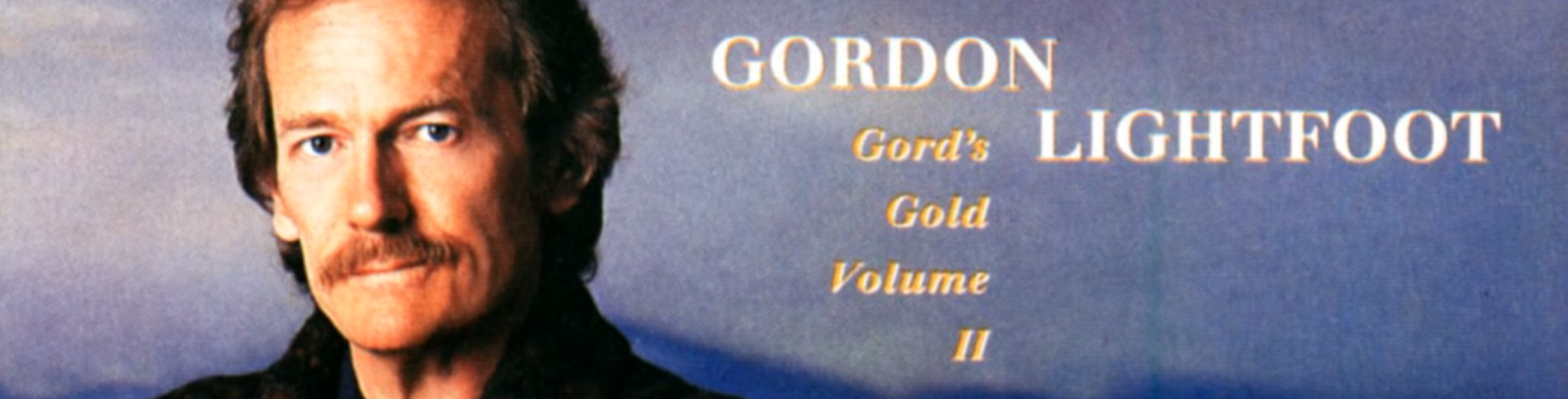
In all seriousness, though, given that I was so interested in the song it was only natural that not so many years later I would start reading books and articles about the events surrounding this notorious loss of the Edmund Fitzgerald. Gordon Lightfoot was one of the first singer-songwriters who captured and fired my imagination. He (among some others) caused me to think about time and experience in a different way; as something within me and happening alongside me, not just random stuff apart from my life. Perhaps it’s a testament to the very idea of songwriting and musicianship as artforms. For me, Lightfoot embodied that troubadour tradition. These artists sing the tales of history, document it in personal ways, and help shape a democratic view of history itself.
Of course, everyone knows most famously Bob Dylan as one of these history-singers. But there were many others. I would include people like Sister Rosetta Tharpe, Billie Holiday, Utah Phillips, and Natalie Merchant amongst that group. So many… From Woodie Guthrie and Townes Van Zandt to Tracy Chapman and Ani DiFranco and P.J. Harvey. It’s such a rich – and necessary – tradition.
I find it fitting that my interest in the event of the wreck of the Edmund Fitzgerald and learning about the history surrounding it – not to mention becoming curious about the whole Great Lakes region – is all connected to the art of singing out moments of collective experience. This, like so many other things, I owe to art and artists. This is the richness of life: Not in things, but in awareness. Not in owning, but in being.
The SS Edmund Fitzgerald as seen from the Ambassador Bridge in 1965. Detroit Historical Society
Today is the 50th anniversary of that ship sinking on Lake Superior. There are many interesting articles currently available from the days and weeks leading up to today (including this one from the Smithsonian and this one from Popular Science). So read about the ship. Read about the song, and listen to it (here’s the first version, but I’ve always been partial to the 1988 re-recording Lightfoot made – it’s a tad longer and has a slight mood adjustment that feels symbolic and mystical to me).
Then take at least 29 seconds – one “for each man on the Edmund Fitzgerald” – and may those moments of silent remembrance of them cause you to consider what human commerce, ingenuity, and hubris can do in the face of Nature’s power.